Getting sick is stressful, especially when you have to worry about hospital bills or what happens to your family if you cannot work for several days. The effects can spill into other household expenses, including rent, school fees and everyday living costs. That is why health insurance is important. By reducing some of the financial uncertainty surrounding illness, it can also give families peace of mind.
The World Health Organization estimates that around 385 million people in the African region are pushed into or deeper into poverty each year because of out-of-pocket health spending. Across Africa, where many households still pay for healthcare directly from their own pockets, that protection matters.
What is financial stress?
Financial stress is the worry or pressure you feel when you are unsure whether the money you have will be enough to meet your needs. It can come from struggling to pay rent, school fees, debt, or even a health emergency (which are often difficult to predict).
The World Health Organization describes financial hardship from healthcare as what happens when health spending begins to reduce a household’s ability to afford basic needs and other important expenses. In 2022, 2.1 billion people experienced this kind of hardship globally.
Health problems can become money problems
When someone in a family becomes ill, the financial effect can go beyond paying for medicine or treatment. A family may have to deal with:
- Medical expenses (treatment, tests and medicines).
- Transport and other costs involved in getting care.
- Lost income (when the patient or caregiver cannot work).
- Pressure on savings that were meant for other things.
- Borrowing or selling assets when available cash is not enough.
Research across 15 African countries found that households commonly responded to healthcare costs by borrowing money or selling assets to pay for treatment, particularly when dealing with expensive inpatient care. This is one reason health costs can create so much anxiety for low income households.
Insurance can reduce the fear of the unknown
Health insurance cannot prevent someone from falling ill, however, it can make the financial consequences more predictable. And there is evidence that simply knowing you have protection can reduce stress.
Researchers ran a randomized experiment involving 789 informal workers in Nairobi, comparing people who received free health insurance with people who received the same value in cash and a group that received neither. Those given insurance showed a 0.29-standard-deviation reduction in self-reported stress and about a 16% reduction in the stress hormone cortisol compared with the control group. The researchers described the results as suggestive rather than definitive because some statistical robustness tests weakened the findings, but they concluded that insurance may create a genuine “peace of mind” effect.
Another study, from Nigeria, of a health-insurance programme in Kwara State found that insurance reduced catastrophic health spending in the short term, particularly among poorer households and families with chronically ill members, although those effects were not statistically significant four years later. So the goal of insurance is not to promise that a family will never worry about money again. It is to make one major source of uncertainty more manageable.
How insurance can make families feel more secure
1. A medical emergency does not have to plunge you into debt
Without insurance, an unexpected hospital stay may mean immediately searching for money. With health cover, the family already knows that part of the financial risk has been planned for. The exact protection depends on the policy, but having that support can make an emergency feel less like a completely unknown expense.
2. Savings don’t have to be broken
When healthcare has to be paid entirely out of pocket, families may have to use money meant for school fees, rent, business stock or emergencies. Evidence from rural Kenya found that uninsured health shocks caused some households to reduce their non-health spending by about 25%. When those health shocks were insured, the same households were better able to maintain their normal spending because their direct healthcare costs were lower. Insurance therefore helps protect not just healthcare spending, but the other plans competing for the same household money.
3. Families don’t have to borrow or sell something important
When a large health bill appears suddenly, borrowing can feel like the only option, especially for a low income earner. The World Bank's research on Ghana’s national health insurance found evidence that formal insurance can help families avoid some costly ways of coping with illness, including measures such as taking children out of school to help the household respond to the financial shock. The principle is simple: the more of the health risk that is already covered, the less pressure there may be to solve the emergency by creating another financial problem.
4. Health cover can help when sickness also stops income
If a salaried employee spends several days in hospital, their employer may still pay them. This is not the case for an everyday earner (a trader, construction worker, hairdresser or driver) who may simply earn nothing on the days they cannot work. Hospital-cash insurance can help with this second problem by providing money after an eligible hospital stay that can be used towards household needs while the person recovers.
M-KOPA customers are reporting less financial anxiety
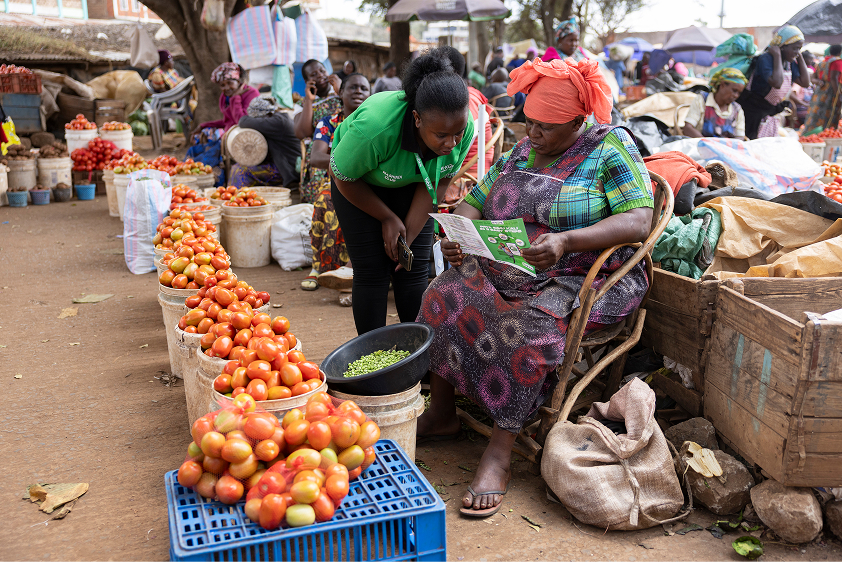
We can see this “peace of mind” effect in our own customer research. In Kenya, more than half of women surveyed said their insurance had reduced their financial anxiety. More than 75% of customers who had made a claim also said the insurance helped ease their daily payment obligations, while over half of all surveyed customers said the safety net had given them greater confidence to invest in their businesses. In Ghana, our impact report found that 67% of insured customers felt more confident about handling health expenses. For 67%, M-KOPA was also their first access to health insurance. Those numbers matter because financial stress is not only about what someone pays after falling sick. It is also about how vulnerable they feel before anything goes wrong.
Case studies
Sarah Owuor Anyango, a hairdresser in Dandora, Kenya, couldn’t earn when she fell sick. After one hospital stay, she received KSh5,000 through her M-KOPA health cover and used KSh4,000 of the claim to pay her rent while she recovered.
Boniface Mutiso, another customer in Kenya, had a similar experience. After an eligible hospital stay, he received KSh7,000 within two days of his claim, which he said helped him take care of his family’s needs after leaving hospital.
These are the moments when “peace of mind” stops being an abstract insurance phrase. It means knowing that being sick does not automatically leave every other household expense uncovered.
Conclusion
Health cover is a safety net, not a guarantee that illness will cost nothing. Policies have limits, exclusions and eligibility requirements, which means some expenses may still have to be paid directly.
A health emergency should first be a health problem, not immediately become a financial crisis too. For African families, insurance can create breathing
room between those two things.
Our customer research shows that people are not only receiving money when they claim; many say they feel more financially confident simply because the protection is there.
If you want to understand how that protection works, explore M-KOPA health cover.