




Getting sick can create two problems for an Every Day Earner at the same time. There is the cost of dealing with the illness itself, but there can also be the money lost when you are too sick to work.
That combination matters particularly in Ghana, where most working people earn outside formal employment. The country has made significant progress through the National Health Insurance Scheme (NHIS), but insurance does not yet reach everyone, and households continue to pay some healthcare costs directly from their own pockets.
For informal workers, closing that gap requires not only more health protection, but easier ways to access it.
Why informal workers face a bigger healthcare gap
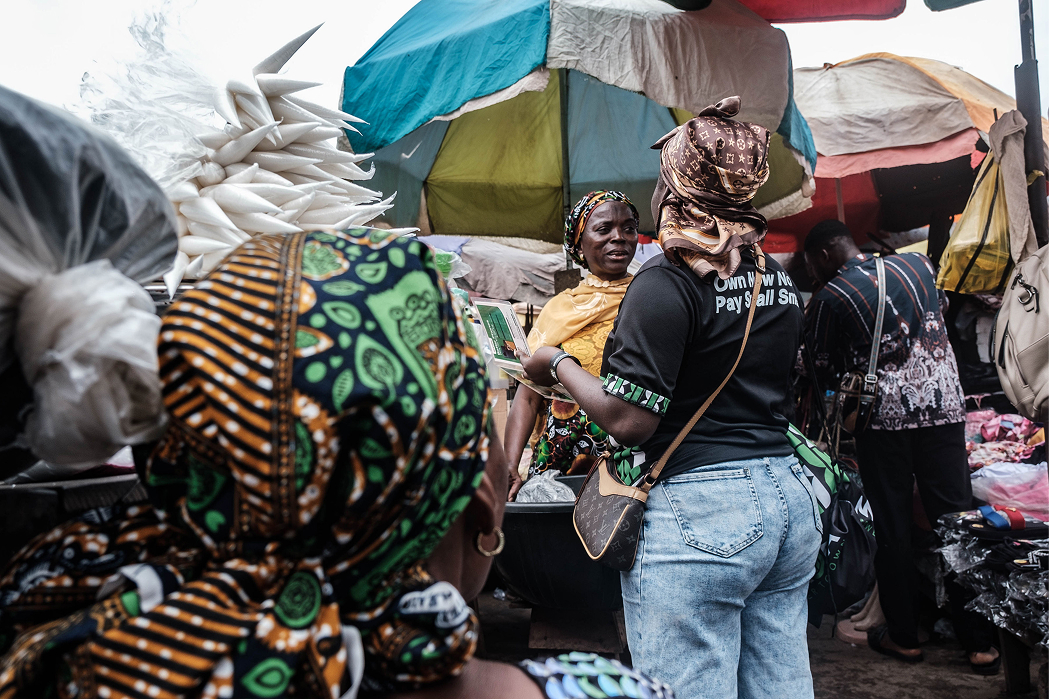
An informal worker could be a market trader, driver, construction worker, hairdresser, farmer, artisan or small-business owner. What many have in common is that their income depends directly on being able to work. And this represents a very large part of Ghana’s workforce.
According to the Ghana Statistical Service’s employment data, informal-sector employment accounted for about 87% of employment in 2023. The problem is that many of the protections that can make illness financially easier to absorb, such as paid sick leave and employer-provided health benefits, are connected to formal employment. A salaried employee may have predictable monthly income, paid sick leave or health benefits through work. A trader who cannot open her stall for several days may simply make no sales. A construction worker who spends a week in hospital may earn nothing during that week.
For an Every Day Earner, therefore, illness can hit the household in two directions:
- Healthcare expenses increase because treatment, medicines, transport, etc. arise.
- Income can fall because the person may be unable to work while sick or recovering.
NHIS has expanded access, but a gap remains
Ghana is not starting from zero. The NHIS has significantly expanded financial access to healthcare and remains the country's central health-insurance system.
A 2024 report from the Ghanaian Ministry of Finance showed that active NHIS membership reached about 18.4 million people (or 56.3% of Ghana’s population). That is substantial progress, but it also means a large share of the population still did not have active NHIS membership.
Insurance also does not remove every cost a household can face. The WHO’s latest National Health Accounts analysis for Ghana found that people were still paying 25.03% of current health expenditure directly out of pocket in 2022, despite that share falling from 33.48% in 2018. This matters for someone living on income earned day by day.
For an Every Day Earner, the hospital bill is only part of the problem
Even where treatment itself is partly covered, money may still be needed for other expenses while illness may simultaneously reduce what the household is earning. Abraham Asare Russell, a construction labourer from Ghana’s Eastern Region, experienced exactly that.
When Abraham became ill and spent a week in hospital, he was not earning during the days he was admitted. Because his M-KOPA smartphone included health cover, he was able to make a claim and received hospital cash. Abraham explained that the money enabled him to manage his daily expenses while he recovered instead of immediately returning to work when he was not fully recovered.
His experience shows why health protection for informal workers has to consider more than the medical bill. If your income depends on what you sell, build, drive or produce each day, several days away from work can affect rent, food, school expenses and the money needed to restart your business. Hospital cash is designed to provide an additional buffer around that disruption.
How M-KOPA’s bundled health cover makes access easier
The affordability problem with insurance is not always only the price of the policy. Sometimes the difficulty is having to find another provider, understand another product, complete another application and make another separate payment when money is already stretched.
At M-KOPA, we change that journey by putting health protection inside something the customer is already familiar with. Our health cover is bundled directly into eligible M-KOPA smartphone instalment plans through our partnership with Turaco.
In practical terms, the model reduces several barriers at once.
1. Health cover is bundled with an eligible smartphone plan
We embed health protection directly into our smartphone plan, so customers don’t have to complete a separate sign-up process or visit a third-party provider to get health insurance. Also, there is no separate insurance application or additional setup required.
For someone encountering formal insurance for the first time, removing extra steps can make protection easier to understand and maintain.
2. Protection fits into payments customers already make
We let customers make smartphone payments daily, weekly or monthly, allowing the broader relationship to fit more naturally around the way many Every Day Earners receive income.
This is important because affordable access is not only about the total cost of something. It is also about whether the way it is accessed makes sense for the person paying for it.
3. Claims can begin from a phone
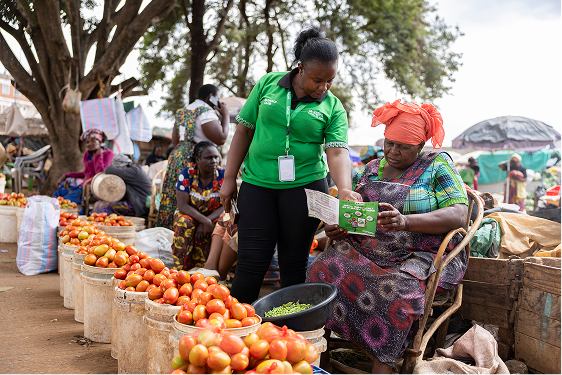
When an eligible customer needs to claim, they can contact Turaco by WhatsApp or direct phone call, and submit the required documents digitally. Approved claims are paid within 3 business days once complete documentation has been received and verified.
Again, the principle is reducing friction around protection rather than expecting an informal worker to navigate a complicated insurance process alone.
What does the M-KOPA health cover actually provide?
For eligible M-KOPA customers in Ghana, the current cover includes two main protections:
- Hospital cash: GH₵125 for each eligible night spent as an inpatient at an accredited hospital, for up to 10 nights and a maximum hospital-cash benefit of GH₵1,250 during the covered period.
- Life cover: GH₵5,000 paid to the registered next of kin following an eligible death.
Terms and conditions still apply.
For many customers, this is their first insurance
The strongest evidence that bundling is expanding access comes from the people using it. Our 2026 Ghana Impact Report found that 67% of insured customers were accessing health insurance for the first time through M-KOPA. The same research found that 67% felt more confident about handling health expenses, while 43% of female customers said the health insurance was one of the reasons they chose an M-KOPA smartphone.
Those numbers are important because they tell us something beyond whether existing insurance customers like the product. The model appears to be bringing formal protection to people who had not previously had it. That is where bundling can make a difference. Instead of asking an Every Day Earner to first develop an interest in insurance, find a provider and create room for another standalone financial product, protection meets them inside a product they already understand and value.
Digital health cover complements the NHIS
Our Health Cover should not be confused with comprehensive medical insurance, nor is it designed to replace Ghana’s NHIS. The NHIS provides access to a broad package of eligible healthcare services. M-KOPA’s bundled cover addresses a more specific financial risk by providing hospital cover following an eligible inpatient stay, alongside the applicable life benefit.
For an informal worker, those forms of protection can play different roles. NHIS can help reduce the cost of eligible medical care, while hospital cover can provide additional money around the period when illness has interrupted work and other expenses continue. The point is not to choose one instead of the other. It is to give Every Day Earners more layers of protection when illness puts pressure on both their health and their income.
Making health protection easier to reach
Ghana has made real progress in extending healthcare protection, but the numbers show that access is still incomplete. This gap matters especially for informal workers because an illness can create medical expenses at exactly the same time that it takes away their ability to earn.
That is the opportunity behind our bundled model. By making health cover part of an eligible smartphone instalment plan, the customer does not have to begin with a separate insurance journey. The phone becomes a route into another form of financial protection.
Want to join other informal workers taking advantage of this? Contact us today.
.svg)


