



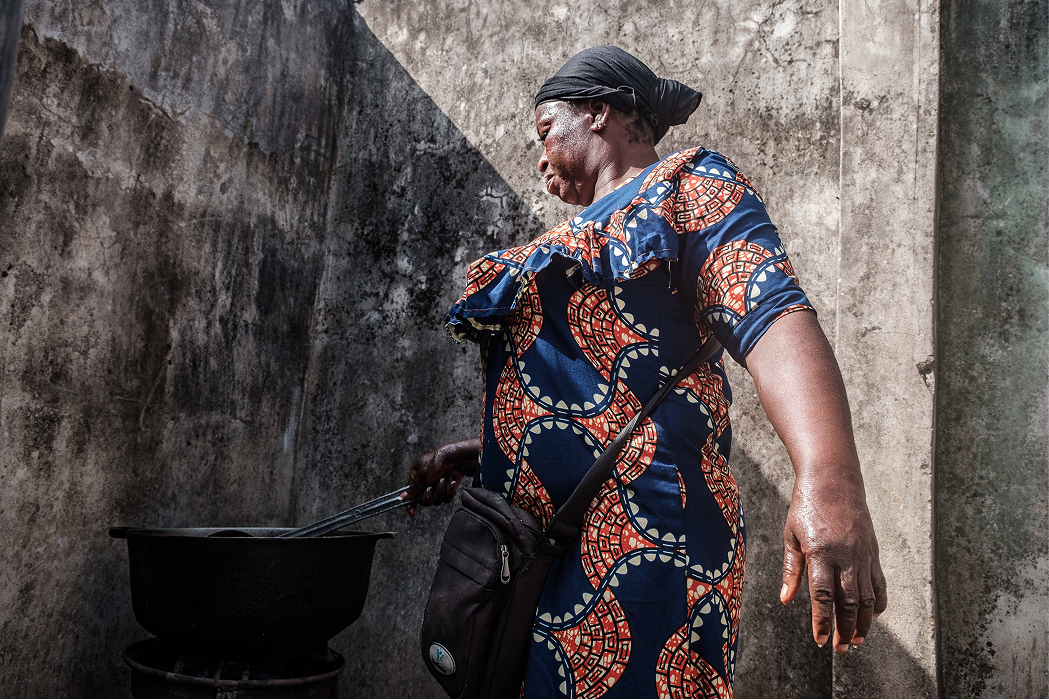
Africa’s informal workers are not a small group sitting outside the mainstream economy. They are the mainstream: the International Labour Organization estimates that about 85.8% of employment in Africa is informal. Yet many of the systems designed to protect people when they get sick still work best for someone with a regular salary, formal employer and predictable monthly income.
For a trader, mechanic, hairdresser or boda boda rider, that creates a gap between being economically active and being financially protected. Digital insurance is beginning to close it by making health cover easier to access, pay for and use.
Most workers sit outside the traditional model
Health insurance is easiest to organise around formal employment. An employer can enrol workers, deduct contributions from salaries and maintain the records needed to administer the scheme. Informal workers often have none of those advantages, even when they earn consistently.
Across six Sub-Saharan African countries surveyed by the ILO and its partners, informal workers identified access to healthcare as their most important social-protection need, suggesting that the problem is not simply a lack of interest in being insured. The deeper problem is that the way insurance is traditionally organised can be poorly matched to the way informal workers live and earn.
Irregular income makes regular premiums harder
Someone who earns a salary usually knows approximately how much money will come in and when. On the other hand, a trader may have an excellent weekend and a slow Monday, while a self-employed worker may earn only when customers need them. That makes fixed premiums harder to manage, even when the total cost of insurance might be affordable over time.
Research from Ghana, for example, found that irregular income and difficulty assessing the earnings of informal and self-employed workers made it challenging to structure contributions around people's actual ability to pay. Among poorer households, the inability to afford premiums was also a major factor why people failed to enrol or renew their health insurance.
Likewise, research into Nigeria’s health-insurance system found that coverage had historically favoured the formal sector, while informal workers faced obstacles including poverty, low awareness and payment methods that did not fit conveniently into their working lives.
The problem, then, is not always that informal workers cannot pay anything. It is often that insurance expects them to pay in a way that assumes their income behaves like a salary.
Enroling can be another obstacle
Enroling for health insurance can require people to understand unfamiliar products, complete registration steps, provide documentation and sometimes travel somewhere simply to enrol or make payments.
Those inconveniences carry a bigger cost for someone whose income depends on being physically present at work. A trader who leaves a stall for several hours to deal with paperwork is not only spending time; they may also be giving up sales.
This helps explain why health-insurance coverage remains limited in many markets with large informal economies. In Tanzania, for instance, GSMA reports that less than 30% of the population has health insurance, leaving millions of people, many of them informal workers, paying for healthcare when they need it.
A better model therefore needs to reduce both the financial barrier and the effort required to become insured.
Digital insurance removes some of the friction
Mobile technology changes what insurance distribution can look like. A customer can potentially enrol from a phone, pay digitally, receive policy information remotely and submit a claim without repeatedly visiting an office.
The opportunity is significant because mobile financial access is already much wider than insurance coverage. In 2023, only 12% of the potential global microinsurance market was insured, while there were at least 1.8 billion registered mobile-money accounts.
African businesses have already begun using that infrastructure in different ways. Tanzania's Jamii, for example, created a system through which MSMEs and lower-income customers could order and pay for health insurance on their phones via USSD and mobile money, reducing the administrative cost of health insurance. Nigeria's Soso Care, for example, has also experimented with a waste-to-health model, using digital technology to allow low-income populations to pay for health insurance using recyclable materials.
Apparently, there is no single digital model that solves the health insurance gap. What these approaches have in common is that they start with the life of the informal worker and redesign the journey around it.
What if insurance becomes part of something people already use?
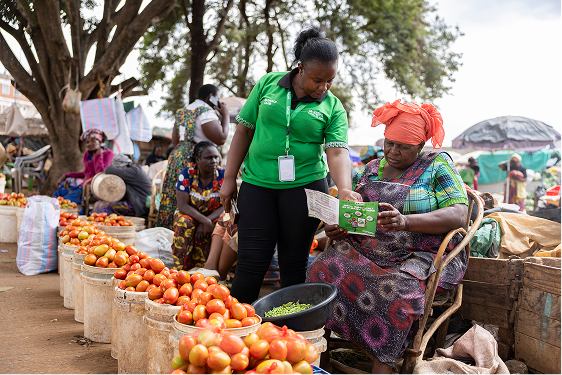
At M-KOPA, one way we have approached the same problem is by removing the need for a separate insurance journey altogether. Instead of asking an Every Day Earner to first find an insurer, understand a new product and complete another payment process, health protection can be embedded into a product they are already using — their smartphone.
Health cover is bundled into eligible M-KOPA smartphone instalment plans through our partnership with Turaco. The impact suggests just how large the traditional access gap is. In our latest Ghana research, 67% of insured M-KOPA customers were accessing health insurance for the first time, while 67% said the cover made them more confident about handling health expenses. Among women, 43% said the health insurance itself was one reason they chose an M-KOPA smartphone.
The same model has already reached scale in Kenya due to our partnership with Turaco. Within one year, we provided Hospital Cash cover to more than 1 million customers, three-quarters of whom previously had no health insurance. The smartphone is therefore doing more than connecting customers to the internet. It can become a distribution point for financial protection that might otherwise have been difficult for them to find or access.
Digital insurance could be the difference between life and death
For informal workers, getting sick can create two financial problems at once. There may be hospital and treatment expenses to deal with, while the person may also stop earning for every day they cannot work. We have seen that problem directly through customers such as Isaac Legba, a car dealer in Ghana who was attracted to his M-KOPA phone partly because of the health protection that came with it. Two months later, he became ill and required surgery; his M-KOPA health cover paid GHS745 following his hospital stay, giving him additional money to manage everyday expenses while recovering. In Kenya, customers have described the same benefit in different circumstances. Boniface Mutiso received KSh7,000 following a hospital admission and used the money to help support his family after discharge.
These benefits do not replace the need for strong public healthcare systems or comprehensive medical insurance. What they show is that relatively simple digital protection can give an informal worker a financial buffer at exactly the moment when illness threatens both their health and their income.
Conclusion
Africa cannot close its healthcare protection gap by designing primarily for salaried workers when most people earn outside formal employment. Insurance itself has to become easier to access and better suited to irregular incomes, mobile financial habits and the realities of people who earn day by day.
That is the opportunity behind digital and embedded insurance we provide at M-KOPA through Turaco’s partnership. By making health cover part of an M-KOPA smartphone, we remove a separate application and premium journey and give more Every Day Earners access to protection through something already present in their daily lives.
The goal is to make insurance work better for the people Africa's economy already depends on.

.svg)


