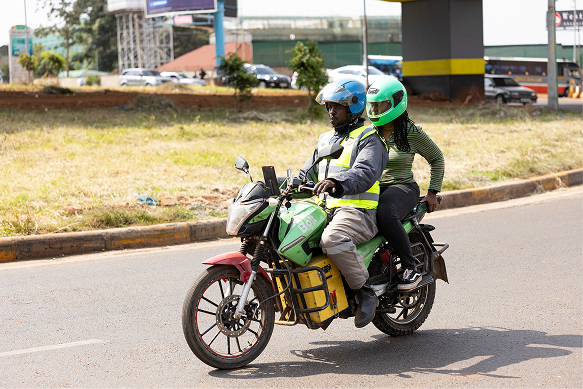
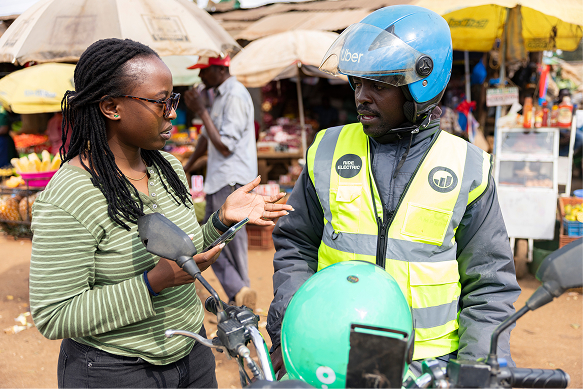
For a boda boda rider, earning more does not always mean finding more passengers, charging higher fares or working longer hours. Sometimes, the biggest difference comes from spending less of what you already earn.
Petrol motorcycles come with recurring fuel, maintenance and repair costs. Electric motorcycles can reduce some of those expenses, leaving riders with more of the money they earn. So what does the difference look like, in real money, for riders?
Read along as we explore that.
What a rider earns is not what they take home
Imagine a rider makes KSh2,000 from passengers during the day. That KSh2,000 is not necessarily his take-home pay, because he has to buy petrol to be on the road, and perhaps incur other maintenance costs.
For riders working through ride-hailing platforms, the platform takes its commission first, sometimes with VAT also applying to that commission. The rider then has to pay for the motorcycle’s energy, maintenance and, where applicable, financing before arriving at their actual take-home pay.
An electric motorcycle does not necessarily increase the fare a passenger pays. Its biggest advantage, for the rider, is that it can reduce how much of that fare disappears into keeping the motorcycle on the road.
Petrol cost reduces a rider’s earnings
For a petrol rider, fuel is a recurring cost that rises with every kilometre travelled. Engine oil, spark plugs and other mechanical components add further expenses over time.
In a recent before-and-after study, researchers followed commercial riders in Nairobi as they moved from petrol to electric motorcycles. They found that median energy cost per kilometre fell by 70.9% after riders made the switch (from US$0.0525 per kilometre on petrol motorcycles to US$0.0153 on electric ones).
Importantly, the riders continued travelling broadly similar daily distances and at similar speeds. In other words, they were still doing roughly the same work. It simply cost much less to move each kilometre.
An earlier Nairobi pilot study by Manufacturing Africa found a similar result. Around 40 riders, including a control group using petrol motorcycles, tested locally assembled electric bikes while working on ride-hailing and delivery platforms. The pilot concluded that electric riders could make about 35% more because of lower charging and maintenance costs.
Lower costs matter more for everyday earners
Electric motorcycles can be particularly attractive for boda boda and ride-hailing riders because a commercial rider may spend most of the day on the road. While every kilometre creates income, it also creates a running cost. The more kilometres a rider travels, the more often the difference between petrol and electricity is repeated. Going electric can reduce that cost per kilometre, which therefore improves the margin on dozens of trips every day.
That was the thinking behind our electric-motorcycle partnership with Bolt. At launch, we estimated that participating riders could reduce vehicle operating costs by as much as 75%, largely through lower energy and maintenance spending.
While this number may feel abstract, the experiences of real riders (within and outside our network) make the difference much clearer.
Real stories: e-bike riders are earning more each day
Alfred Makori, Kericho
When Kericho rider, Alfred Makori, was interviewed in April 2026, he had been using his electric motorcycle for only two weeks. He had previously earned around KSh700 a day on his petrol motorcycle but was now earning as much as KSh1,200 a day after switching to electric.
He spends about KSh240 to recharge after travelling 80–100km over two days, compared with the nearly two litres of petrol he previously used to travel around 40 kilometres each day.
Richard Joel, Nairobi
Nairobi rider Richard Joel, after moving from a petrol Boxer to an Ampersand electric motorcycle, said he now takes home around KSh1,000 a day, about twice what he previously kept.
Although Richard reported paying KSh450 a day towards his financed bike and spending about KSh265 on a full charge, he says lower energy and maintenance costs have improved what remains in his pocket at the end of the day.
Lilian Muyonga, Dagoretti South
Lilian Muyonga, a boda boda rider in Dagoretti South, said she used to spend around KSh700 every day on petrol but now spends about KSh200 on electricity. That is roughly KSh500 less spent powering the bike before considering other expenses. She says the savings now help her pay household bills and school fees for her children.
Kevin Otieno, Umoja
Before switching, Kevin Otieno, a boda boda rider in Umoja, could spend as much as KSh1,200 on fuel in a day and sometimes take home only KSh700–1,000. With his electric motorcycle, his main energy expense became battery swaps at about KSh450 each, usually once or twice depending on his riding.
NB: These riders use different bikes and charging systems, so their numbers should not be treated as one standard earning figure. What is consistent is the mechanism: when it costs less to ride, more of the day's revenue can become take-home income.
M-KOPA riders show the same pattern at scale
We have similar stories to tell at M-KOPA. With over 5,000 e-bikes financed in Kenya, our latest impact findings show that riders save an average of KSh730 per day through lower energy spending, fewer repairs and efficient battery swapping. And 67% of surveyed riders say they are earning more since switching to electric.
Armstrong Eungu Odhiambo, who rides in Dagoretti Corner, says he has been consistently saving about KSh1,000 while travelling 60–70 kilometres per charge. He now uses the additional money for household needs, his children’s school fees and regular deposits into a savings account.
For Erick Odero Ochiel, in Waithaka, lower costs changed his working life altogether. When he used a petrol bike for online riding, the earnings were not enough, but after switching, he says he has been able to ride online full-time while still making his bike payments and putting money into personal savings.
Read more stories here: Real Stories from M-KOPA Mobility Riders.
Conclusion
For Kenyan riders, increasing daily earnings can simply be by making a decision to replace their petrol bike with an electric one.
If you are considering making the switch, explore M-KOPA Mobility today!