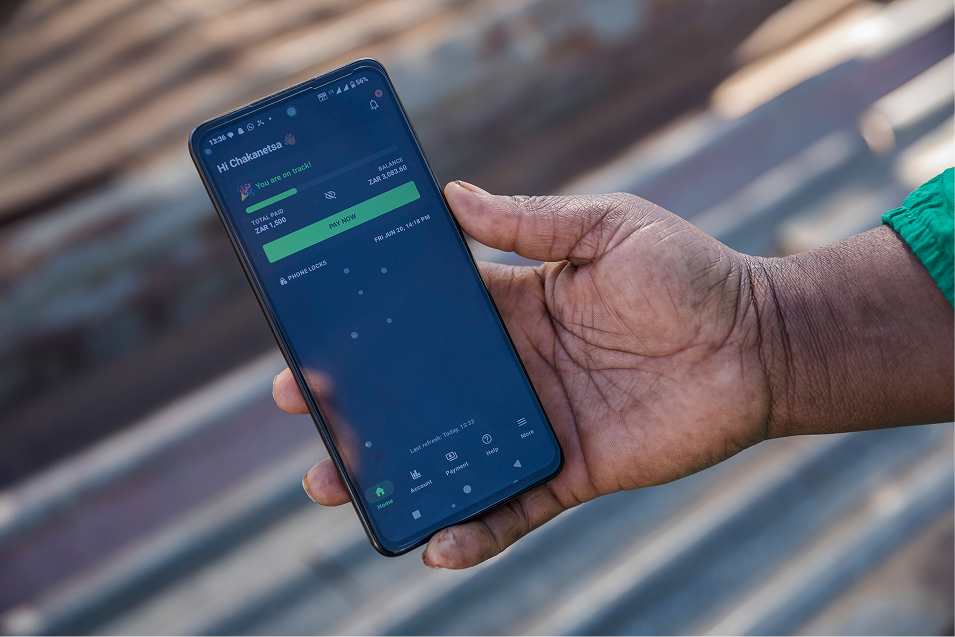
If you have just bought an M-KOPA smartphone and need a cash loan, waiting three months can feel unnecessary. You are already a customer, so why not make the loan available immediately?
The answer is that your smartphone payments are doing more than paying for the device. They are also creating a financial track record (i.e credit history) for you. For many Every Day Earners who do not have payslips or collateral, those regular payments give us a practical way to understand how comfortably you manage credit before offering you more of it.
The waiting period is not only about deciding whether we can lend to you. It also provides time to understand whether adding another repayment is likely to be manageable for you.
Why not offer a loan on day one?
Traditional lenders usually assess borrowers using information such as salary records, bank statements, collateral and previous borrowing history. Many Every Day Earners do not have all of those things. And while they may be perfectly capable of repaying a loan, they have little formal credit history to prove it.
At M-KOPA, we ensure customers can finance a smartphone without needing collateral, guarantors or an existing formal credit score. As they make repayments, they begin creating evidence of how they manage that financial commitment. We describe this as a progressive credit model in which daily repayments build a customer's credit history and can unlock additional products over time.
Your smartphone payments become a financial track record
What we do at M-KOPA is use your payment history, account behaviour and information (provided when you first signed up) to assess your eligibility for additional products and services. Customers who consistently keep their accounts in good standing have a better chance of qualifying for added benefits like digital loans. This is similar to credit scoring.
Research shows that credit history can be particularly valuable when traditional financial information is limited. CGAP's guide to credit scoring for financial inclusion describes customers' repayment histories as one of the most useful inputs lenders already possess for assessing credit risk. More broadly, the International Finance Corporation has found that alternative information such as digital payments and other transaction records can help lenders assess borrowers who would otherwise be difficult to see through conventional credit systems.
For an M-KOPA customer, that means something quite practical: paying for your smartphone is also an opportunity to show how you handle credit.
Why the three months matter
Three months gives us time to learn several things about you before another financial obligation is added.
1. It shows a pattern, not one good week
Almost anyone can have a week when money is flowing well. Three months gives a better view of how payments are managed across good weeks, slower periods and ordinary everyday expenses. That does not mean a customer's income has to be identical every day because we understand that cash flows, especially for Every Day Earners, can vary. What matters is whether the agreed smartphone payments are being managed consistently enough to keep your account in good standing.
2. It shows whether the first payment fits your life
Taking a digital loan is like creating a second financial commitment, and so before adding that commitment, it is useful to see whether the existing smartphone payment can already fit alongside food, transport, rent, business expenses, school costs and everything else competing for your income. Our three-month period gives customers time to integrate their smartphone repayments into their budget before taking on additional debt. This cannot guarantee that somebody will never struggle with a future loan. What it does is provide more evidence before that loan is offered.
3. It helps determine how much credit may be manageable
Our credit and eligibility models are designed to offer products sized according to each customer's individual risk and borrowing capacity. Your repayment behaviour helps provide the information needed to make that assessment. That is why customers may start with relatively small loan amounts and become eligible for larger offers as they establish a stronger repayment history.
4. It reduces the risk of adding debt too quickly
Digital-credit markets have shown what can happen when borrowing becomes too easy to repeat. A research cited by the World Bank found that 47% of surveyed Kenyan digital borrowers had previously repaid a digital loan late, highlighting the importance of affordability and responsible lending when credit can be accessed within a few taps. A waiting period therefore creates some distance between receiving the smartphone and becoming eligible for another obligation. That is useful if the goal is long-term access to credit rather than simply putting another loan in front of someone as quickly as possible.
Case study: consistency can unlock more over time
After financing an M-KOPA smartphone and making consistent payments for three months, Adewunmi became eligible for her first digital loan. She started with ₦10,000, later accessed ₦20,000 and gradually became eligible for larger amounts as she continued building her credit history. Today she uses digital loans for needs including inventory, emergencies and managing uneven income.
The important part of her story is the sequence:
Smartphone → consistent payments → credit history → small loan → successful repayment → bigger loan(s).
In other words, the first loan after finishing payment for the smartphone does not have to be large to be useful. It simply gives the customer another opportunity to demonstrate what they can manage, which can help inform what becomes available to them next.
What does consistent payments actually mean?
Paying consistently does not mean you should borrow money elsewhere simply to make an M-KOPA payment, nor does it mean taking on more than you can afford just to qualify for a future loan.
The tips below should help.
- Follow your agreed payment plan: Make your smartphone payments on time and keep your account current.
- Pay what you can comfortably sustain: A good credit history should come from money you can genuinely afford to repay.
- Catch up when you fall behind: Missed payments can affect your account standing and future eligibility.
- Do not assume 3 months guarantees a loan: Eligibility still depends on your payment record, account behaviour and other information used for assessment.
- Check the loan itself before accepting it: Qualifying does not mean you have to borrow. Consider the amount, interest, repayment schedule and what you actually need.
Note: While timely payments can contribute to a wider credit record for you, late or missed payments can have the opposite effect as well.
Conclusion
Waiting three months to access an M-KOPA digital loan should not be thought of as waiting for a reward to suddenly appear, but as a period to build a visible record of how you manage credit.
So if you are working towards eligibility for our digital loan, focus less on simply reaching day 90 and more on the payment history you are building along the way. Pay consistently, keep your account in good standing, and when a loan offer becomes available, borrow only what makes sense for you at that time.
Ready to begin your journey. Click here.