



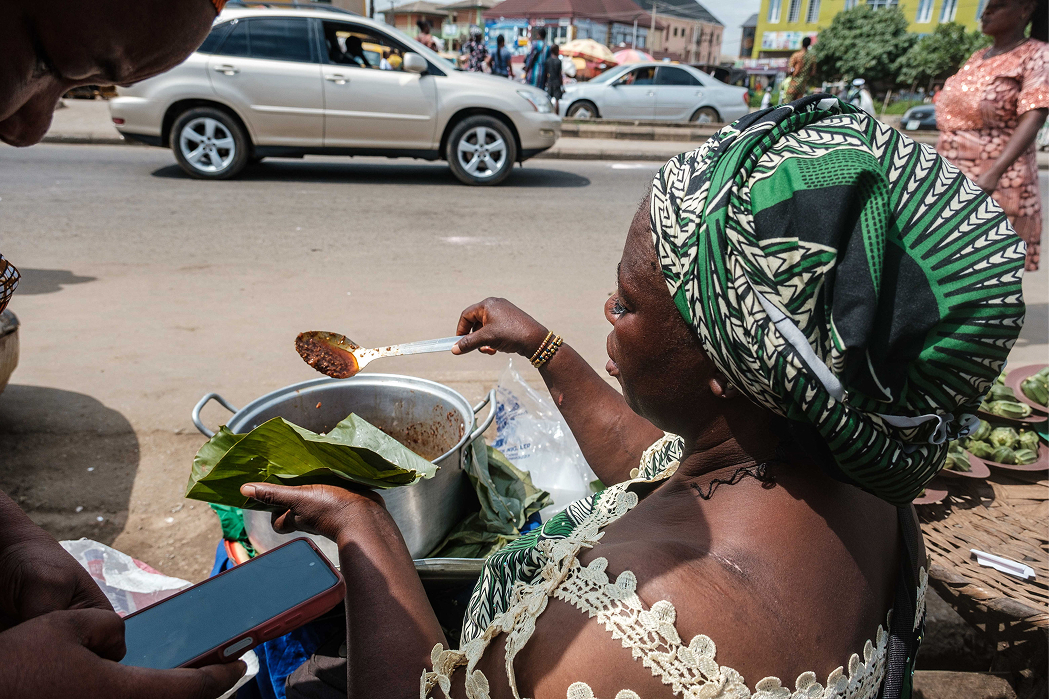
In a country where only 6% access formal credit, a quiet revolution is happening. Over 1 million Nigerians have unlocked ₦230 billion in credit—not through banks, but through their smartphones.
Here's everything you need to know about digital loans, and how they're changing lives.
When Adewunmi gave birth to her son in 2021, she was worried about money. Like millions of Nigerian women, she worked in the informal economy—no salary, no benefits, no access to bank loans. When unexpected expenses hit, she had nowhere to turn.
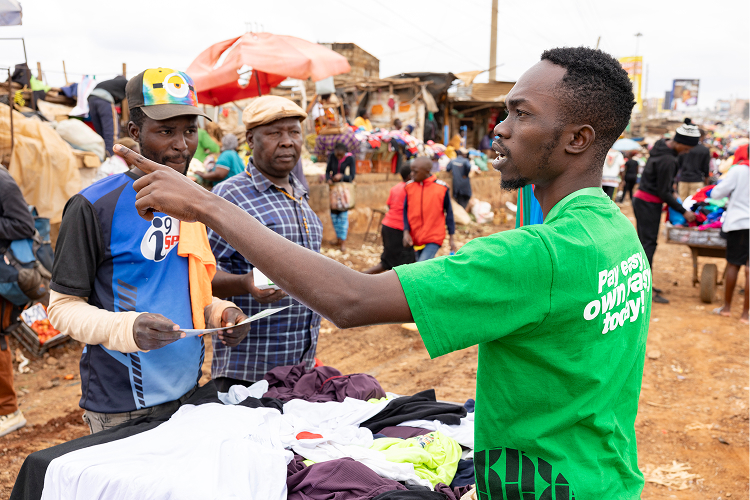
Then her former manager told her about M-KOPA. Not just as a customer, but as a sales agent. She took the opportunity, started earning, and eventually got promoted to Sales Lead, managing 20 agents.
"Working with M-KOPA has truly empowered me," she says. "I can now manage daily expenses, handle emergencies, invest in my future, take care of my family, and pay my child's school fees."
But here's the part that changed everything: after three months of consistent smartphone payments, Adewunmi became eligible for digital loans. Small amounts at first—₦10,000, then ₦20,000. As she repaid on time, her credit limit grew. Today, she uses digital loans to smooth her income, invest in inventory, and handle emergencies without stress.
Adewunmi's story is being replicated across Nigeria. Over 1 million customers have accessed ₦230 billion in credit through M-KOPA's digital loan platform. And Nigeria has become M-KOPA's fastest-growing market.
This isn't just about money. It's about dignity, opportunity, and finally being seen by the financial system.
The Credit Gap: Why Traditional Banks Fail Everyday Earners
Let's start with an uncomfortable truth: Nigeria's banking system doesn't work for most Nigerians.
If you're a market trader, an okada rider, a hairdresser, a food vendor, or any of the millions of Nigerians earning income in the informal economy, traditional banks have a simple message for you: You don't qualify.
Why? Because banks want:
- Proof of formal employment (salary slips, employment letters)
- Collateral (property, vehicles, fixed assets)
- Regular monthly income (not daily or weekly earnings)
- Bank statements showing consistent deposits
- Credit history from previous loans
If you don't have these things, you're invisible to the banking system.
But here's the irony: everyday earners need credit more than anyone. They need it to:
- Buy inventory for their businesses
- Smooth income during slow periods
- Handle emergencies (medical bills, school fees, repairs)
- Invest in growth opportunities
- Avoid predatory informal lenders charging 20-30% interest per month
This is the credit gap—the space between who needs credit and who can access it. And it's quite massive.
The Smartphone as Collateral
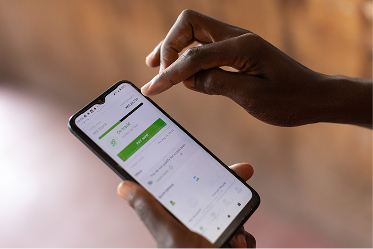
Digital loans work differently. Instead of asking for property deeds or salary slips, they ask one simple question: Can you make consistent payments on your smartphone?
If the answer is yes, you're creditworthy.
Here's how M-KOPA's model works:
Step 1: Get a Smartphone
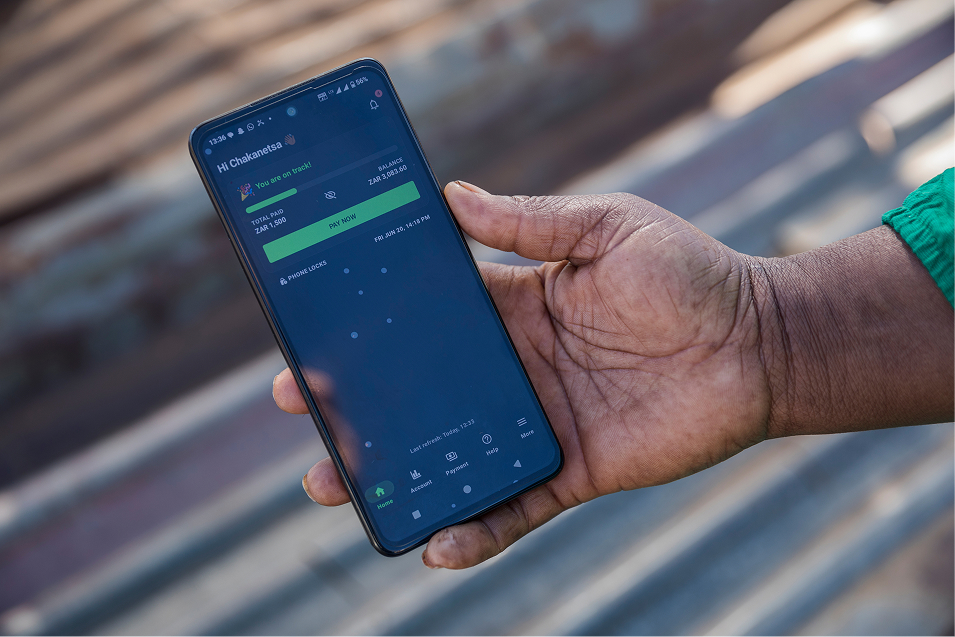
You pay a small deposit (often ₦40,000-₦60,000) and take home a quality smartphone. You then make daily, weekly, or monthly payments through mobile money.
Step 2: Build Your Credit History
Every payment you make is recorded. You're building a digital credit history—proving you can manage credit responsibly.
Step 3: Unlock Digital Loans (After 3 Months)
After three months of consistent payments, you become eligible for digital loans. Start small—₦10,000 or ₦20,000. Repay on time, and your credit limit grows.
Step 4: Access Larger Amounts
As you build your credit history, you can access larger loans—₦50,000, ₦100,000, even ₦200,000+. Use them for business investment, emergencies, or opportunities.
The smartphone isn't just a device—it's your collateral, your credit history, and your gateway to financial inclusion.
Why the Wait Matters
One of the most common questions M-KOPA agents hear is: "Why do I have to wait three months for a loan?"
It's a fair question. If you need money now, three months feels like forever.
But here's why that exists—and why it actually protects you:
1. It Proves Payment Discipline
Three months of consistent payments shows you can manage credit. It's not about punishing you—it's about ensuring you don't take on debt you can't repay.
2. It Builds Your Credit Score
Every payment you make increases your creditworthiness. By month three, you have a proven track record that unlocks better loan terms.
3. It Prevents Over-Indebtedness
Digital credit can be dangerous if accessed too quickly. The 3-month rule ensures you're financially stable before taking on additional debt.
4. It Aligns with Your Cash Flow
Three months gives you time to integrate smartphone payments into your budget. By the time you're eligible for loans, you know you can handle them.
How Digital Loans Drive Economic Growth
Here's where digital loans get really interesting: 77% of M-KOPA Nigeria customers use their smartphones or digital loans to generate income.
These are loans that drive business growth.
Here's how it works in practice:
For Market Traders:
Amaka sells fabrics in Aba. Every Monday, she needs ₦50,000 to buy inventory from wholesalers. Before M-KOPA, she borrowed from a local moneylender at 20% interest per week. Now, she takes a ₦50,000 digital loan at below 10% interest per month, buys her inventory, sells it during the week, and repays the loan by Friday. Her profit margin has doubled.
For Food Vendors:
Chidi runs a small restaurant in Ibadan. When he gets a catering order for a wedding, he needs ₦80,000 upfront for ingredients. A digital loan lets him take the job, deliver excellent service, and repay the loan from the payment. Without the loan, he'd have to turn down the opportunity.
For Okada Riders:
Emeka's motorcycle needs repairs—₦30,000 for new tires and brake pads. Without repairs, he can't work. A digital loan gets him back on the road immediately. He repays it over two weeks from his daily earnings.
For Hairdressers:
Blessing wants to add braiding services to her salon, but she needs ₦40,000 for training and supplies. A digital loan lets her invest in her skills, attract new customers, and increase her monthly income by ₦25,000.
This is why 75% of M-KOPA Nigeria customers report earning more since accessing M-KOPA. Digital loans aren't just credit—they're economic accelerators.
Breaking Down Barriers to Women's Credit
Banks want collateral—but women are less likely to own property. They want formal employment—but women are more likely to work in the informal sector. They want a male guarantor—a requirement that's both discriminatory and demeaning.
M-KOPA's digital loan model changes this equation entirely.
52% of women customers accessed their first formal loan through M-KOPA. Not their first loan ever (many had borrowed from informal lenders), but their first formal loan—one that builds credit history, has transparent terms, and doesn't require a husband's permission.
This is revolutionary. For the first time, millions of Nigerian women have access to credit based on their own financial behavior, not their marital status or property ownership.
And the impact is measurable. Women's customer participation grew from 29% in 2024 to 33% in 2025. Women now represent 53% of M-KOPA's active sales agents in Nigeria—a 42% increase.
When women access credit, they invest in their families. They pay school fees. They improve nutrition. They start businesses. They lift entire households out of poverty.
Avoiding Digital Credit Traps
Digital loans are powerful tools. But like any tool, they can be misused.
Nigeria's digital credit market has a dark side—predatory lenders with interest rates of 15-20% per month, aggressive collection practices, and instant blacklisting for missed payments.
Here's how to protect yourself:
Red Flags to Watch For:
- Interest rates above 10% per month
- Lenders who access your entire phone (contacts, photos, messages)
- Automatic deductions without your consent
- Threats or harassment for late payments
- Loans that don't report to credit bureaus (you're not building credit history)
M-KOPA's Approach:
- Transparent interest rates (clearly stated upfront)
- No access to personal phone data
- Flexible payment options (daily, weekly, monthly)
- Respectful collection practices
- Payments build your credit history
Best Practices for Borrowing:
- Only borrow what you can repay from your regular income
- Use loans for productive purposes (business investment, emergencies) not consumption
- Repay on time to build your credit score and access larger amounts
- Don't borrow from multiple lenders simultaneously (this leads to debt traps)
- Read the terms before accepting any loan
Digital credit is a tool for empowerment, but only if used responsibly.
The Credit Bureau Reality
In Nigeria, credit bureaus (CRBs) track your loan history. When you repay on time, your credit score improves. When you default, you get blacklisted.
Being blacklisted means:
- You can't access loans from any formal lender
- You can't get a mortgage or car loan
- You can't open certain bank accounts
- Your financial reputation is damaged for years
The good news: M-KOPA reports your positive payment history to credit bureaus. Every on-time smartphone payment and loan repayment improves your credit score.
The bad news: If you default, it will hurt you. Not just with M-KOPA, but across the entire financial system.
How to Protect Your Credit:
- Set payment reminders on your phone
- Prioritize loan repayments in your budget
- Communicate with M-KOPA if you're struggling (we can adjust payment schedules)
- Check your credit report annually (you're entitled to one free report per year)
Your credit history is your financial reputation. Protect it.
Your Path to Digital Credit: A Step-by-Step Guide
Here's your roadmap:
Step 1: Get Your M-KOPA Smartphone
- Visit your nearest M-KOPA agent or go to www.m-kopa.com
- Choose your smartphone model
- Pay your deposit (starting from ₦40,000)
- Take your phone home with you
Step 2: Make Consistent Payments (Months 1-3)
- Set up automatic mobile money payments (daily, weekly, or monthly)
- Never miss a payment (set reminders on your phone)
- Watch your credit history build
Step 3: Access Your First Loan (Month 4+)
- You'll receive notification that you're eligible for a loan
- Start with a small amount (₦10,000-₦20,000)
- Use it for productive purposes (business investment, emergency)
- Repay on time
Step 4: Grow Your Credit Limit (Months 6-12)
- As you repay loans on time, your credit limit increases
- Access larger amounts for bigger opportunities
- Continue building your financial reputation
Step 5: Achieve Financial Stability (Year 2+)
- You now have access to credit when you need it
- You have a credit history that opens doors to other financial services
- You're building wealth, not just surviving
This isn't a get-rich-quick scheme. It's a proven path to financial inclusion—one that 1 million Nigerians have already walked.
The Future of Credit in Nigeria
Nigeria's digital credit market is exploding. Fintech companies are multiplying. And millions of Nigerians are accessing formal financial services for the first time.
But not all digital credit is created equal. Some lenders are predatory. Some charge exploitative rates. Some trap borrowers in cycles of debt.
Our model at M-KOPA is different. It's built on:
- Transparent terms (no hidden fees)
- Productive lending (credit that drives income growth)
- Credit building (every payment improves your financial reputation)
- Customer success (agents succeed when customers succeed)
- Long-term relationships (not one-time transactions)
This is the future of credit in Nigeria—inclusive, transparent, and empowering.
.svg)


