



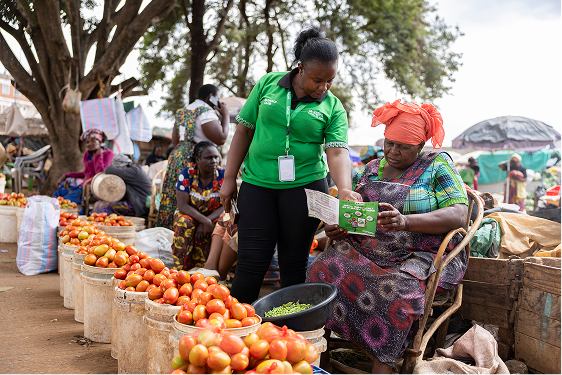
For an entrepreneur, getting sick can become expensive long before the hospital bill is settled. There is the direct cost of treatment, medication, tests or hospitalisation, but there is also the less visible cost of the work that does not happen while the business owner is recovering. For women entrepreneurs, this vulnerability can be even more pronounced.
Alongside the risks that come with self-employment, women are more likely to carry substantial unpaid care responsibilities, face reproductive and maternal healthcare needs during their working lives, and operate businesses with less financial room to absorb unexpected shocks. These pressures are playing out against a wider African healthcare environment in which households continue to carry a significant share of medical costs directly.
Health insurance, therefore, is not simply about being able to afford treatment when something goes wrong. For a woman whose health, household income and business are closely connected, it can also be a way of protecting the economic progress she has already made.
An entrepreneur’s health is part of their business
One of the biggest differences between entrepreneurship and salaried employment is the direct relationship between the owner's ability to work and the income the business can generate. This is particularly relevant across Africa's large informal economy, where workers often have less access to benefits such as employer-sponsored insurance, paid sick leave and other forms of employment protection. The International Labour Organization's research on the scale of informal employment notes that informal workers generally face weaker social protection and job security than workers in formal employment.
Research from Ghana also illustrates how illness can affect income directly. A study based on the Ghana Household Worker Survey found that days of illness had a significant negative relationship with earnings, particularly when illness lasted for more than 30 days. The study on health shocks and self-employment did not argue that every episode of illness will damage a business in the same way, but it reinforces a simple economic reality: when earning depends heavily on your own labour, your health is part of your productive capacity.
This is why health protection is particularly important for the self-employed. M-KOPA has previously explored how health cover can protect self-employed workers and their businesses from the financial disruption of unexpected consultations, treatment and hospitalisation. The risk is not only that healthcare becomes expensive. It is that the money used to solve the health problem may have been intended to solve a business problem.
Women face additional health needs
It would be inaccurate to say that every woman necessarily spends more on healthcare than every man. What can be said more confidently is that women face additional health needs across their reproductive lives, including pregnancy, antenatal care, childbirth and postnatal care, which can create periods of significant healthcare expenditure.
According to the World Health Organization, sub-Saharan Africa accounted for around 70% of global maternal deaths in 2023. That statistic primarily speaks to access and quality of maternal healthcare, rather than insurance alone, but it demonstrates why reproductive and maternal health cannot be treated as a marginal consideration in women's financial planning.
Even where public health programmes or insurance exist, women can still encounter out-of-pocket costs. A Ghanaian study using data from 7,681 women with valid national health insurance found that 19% still made out-of-pocket payments for skilled delivery services. Caesarean delivery was associated with higher odds of additional payment.
Another study of childbirth costs in northern Ghana found something particularly relevant to entrepreneurs: 75% of women in the sample used savings to meet childbirth-related expenses, while 19% sold assets. More than a third incurred payments above 10% of average monthly household income.
For a woman running a small business, savings and assets are not always separate from the enterprise. Savings may be the money waiting to purchase the next batch of goods, while an asset sold to settle a medical bill may be something that contributes to the household's ability to earn. A health expense can therefore affect far more than the month's budget.
Family health can also affect a woman's business
The health risk faced by a female entrepreneur is not limited to her own body. Across the world, women continue to perform considerably more unpaid care work than men. A 2026 World Bank brief on childcare and women's entrepreneurship reports that women spend nearly three times as much time on unpaid care as men, limiting the time available to start, operate and grow businesses.
That matters because a child's illness, an aging parent's hospital appointment or a partner's medical emergency can all take the entrepreneur away from the business, even when she herself is perfectly healthy. The economic cost of family illness can therefore appear both as money spent on care and as productive time lost to caregiving.
For women with dependants, this makes it useful to think about health protection at household level rather than only at individual level. Our guide to family health plans versus individual plans explains some of the considerations involved in choosing between protection for one person and protection that extends to a family.
The right option will depend on the specific policy, market, premiums, exclusions and benefits available, but the broader principle remains: when family health responsibilities fall heavily on the entrepreneur, protecting the household can also help protect the business.
Women-owned businesses have less room to absorb medical shocks
Research shows that women-owned businesses across sub-Saharan Africa often operate under greater financial constraints. The World Bank's “Profiting from Parity” research found that women-owned firms recorded profits that were, on average, 34% lower than those of male-owned firms, with the gap associated with gender-specific constraints including differences in access to capital, business sectors, networks and business practices.
This does not mean women are inherently less capable entrepreneurs. It means many are building businesses from a structurally different starting point, with less capital available to cushion a shock. The healthcare environment makes that vulnerability more consequential. A systematic review covering more than one million households across 31 sub-Saharan African countries found that 16.5% spent more than 10% of their household expenditure on healthcare – a level classified as catastrophic health expenditure. The review also found that the incidence increased again during the 2010s after earlier declines.
For an entrepreneur, catastrophic spending can mean more than a difficult month. If the response to a health emergency is to deplete the same reserves that finance the business, the illness can continue affecting income even after the person has recovered. Our guide to budgeting on a fluctuating income makes a related point: people whose earnings vary need financial buffers precisely because unexpected expenses do not wait for a particularly good month.
The higher stakes make protection more urgent
In August 2026, the World Health Organization Regional Office for Africa warned that around 385 million people in the African region are pushed (deeper) into poverty each year by out-of-pocket healthcare expenditure. At the same time, the organisation noted that governments are facing rising debt burdens, stagnant public expenditure and declining external assistance, prompting African health ministers to endorse a new health-financing strategy for 2026–2035.
The specifics differ greatly from Kenya to Ghana, Nigeria, Uganda, South Africa and other markets, but the underlying challenge is common: paying for healthcare directly at the moment of illness leaves households exposed to costs that can be both large and unpredictable.
Insurance does not eliminate every healthcare expense, nor are all policies equally comprehensive. Coverage limits, exclusions, waiting periods and the type of care included matter. Yet evidence suggests that insurance can materially reduce financial exposure. A systematic review of Ghana's National Health Insurance Scheme, for example, found that uninsured households paid between 1.4 and 10 times more out-of-pocket than insured households across the studies reviewed, although insured households could still face some additional costs.
For an entrepreneur, that difference matters because every medical expense avoided is money that potentially remains available for the other obligations competing for the same income.
Health insurance protects business capital
The value of insurance becomes particularly interesting when we look beyond claims and ask whether feeling protected changes how people use their money. Evidence from our customers suggests that it can. An impact study of our health insurance offering with Turaco in Kenya found that more than half of customers increased investment in their businesses because insurance gave them a greater financial safety net, including customers who had never made a claim. More than half of female customers surveyed also reported reduced financial anxiety because of their insurance coverage.
Our 2026 Ghana Impact Report provides similar evidence. 67% of insured customers were accessing health insurance for the first time. Among female customers, 43% said health insurance was specifically one of the reasons they chose an M-KOPA smartphone, while 67% of insured customers said they felt more confident handling health expenses. This is an important part of the argument for female entrepreneurs. Insurance is valuable when it pays an eligible claim, but financial protection can also create value before an emergency occurs by making it easier to keep savings and business capital allocated to their intended purpose.
Over the years, we have sought to make that protection easier to access by including hospital cover with eligible smartphone plans. You can learn more about how M-KOPA Health Cover works and the eligibility and benefits available in participating markets in the article below.
>> How to Get Hospital Cover with M-KOPA
Why more female entrepreneurs need health insurance
Entrepreneurs routinely plan for risks that might affect their businesses. For women, the reasons accumulate.
- Their own illness can interrupt earnings
- Maternal and reproductive healthcare can create additional periods of financial exposure
- Family illness can pull time away from the enterprise because of disproportionate caregiving responsibilities
- Many women-owned firms operate with less capital available to absorb a sudden expense.
While health insurance cannot remove every one of those pressures,it should sit alongside other forms of preparation, including emergency savings and preventive healthcare. Regular screening, for example, can help detect some conditions before they become more complicated and costly.
For a female entrepreneur, the objective is not only to protect her ability to receive care, but to reduce the chance that one health emergency will undo months or years of work. When the entrepreneur is the engine of the enterprise, protecting her health is also part of protecting the enterprise itself.



.svg)


