



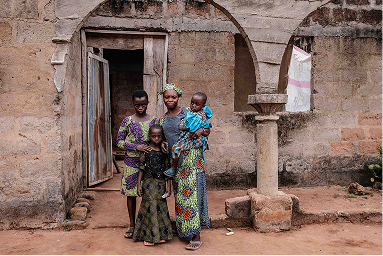
When Abraham fell sick, he didn't just lose his health—he lost his income, savings, and nearly his business. But because he had health insurance bundled with his M-KOPA smartphone, he survived both the illness and the financial crisis.
Here's what every African family needs to know about the true cost of being uninsured.
Abraham is a construction worker in Accra. He wakes up at 5 AM, works 10-hour daily, and earns just enough to support his wife and three children. He's healthy, strong, and careful. He doesn't think about health insurance.
Until he got sick.
"I fell sick and had to go to the hospital," Abraham recalls. "I didn't have an income during the days I was sick in the hospital."
For most Ghanaian families, this is where the story turns tragic. Medical bills pile up. Savings disappear. Assets get sold. Businesses collapse. Families fall into poverty.
But Abraham's story is different. Because when he bought his M-KOPA smartphone, it came with something he didn't fully appreciate at the time: health insurance through Turaco.
"Because they covered my hospital bills, I had cash to take care of my daily expenses," he says. "I didn't have to sell anything. I didn't have to borrow money. I could focus on getting better."
Abraham is one of 67% of M-KOPA Ghana customers who accessed health insurance for the first time through M-KOPA's partnership with Turaco. His story reveals a truth that millions of African families learn too late: the real cost of being uninsured isn't just medical bills but everything you lose trying to pay them.
The Healthcare Crisis: Africa's Invisible Emergency
Let's start with a statistic that should alarm every African family: over 60% of Sub-Saharan Africans have no health insurance.
None. Zero. Nothing.
When they get sick, they pay out of pocket. When they need surgery, they sell assets. When they face a medical emergency, they borrow money at predatory rates or simply go without care.
This isn't a healthcare system. It's a lottery where illness means financial catastrophe.
In Ghana, 67% of M-KOPA customers accessed health insurance for the first time through M-KOPA. Think about that. Two-thirds of M-KOPA's customers—hardworking people with smartphones and businesses—had never had health insurance before.
In Kenya, the numbers are similar. Despite the National Hospital Insurance Fund (NHIF), millions of informal workers remain uninsured because they can't afford premiums or don't understand how to enroll.
The result? Medical expenses are the leading cause of poverty in Sub-Saharan Africa. Families that were getting ahead (saving money, growing businesses, and educating children) get knocked back into poverty by a single illness.
The True Cost of Being Uninsured: Beyond the Hospital Bill
When we talk about healthcare costs, we usually focus on the obvious: consultation fees, medication, hospital stays, surgery.
But the true cost of being uninsured goes far deeper.
The Direct Costs:
- Consultation fees: GHS 50-200 per visit (₦5,000-20,000 in Nigeria, KES 500-2,000 in Kenya)
- Medication: GHS 100-500 per prescription (₦10,000-50,000, KES 1,000-5,000)
- Laboratory tests: GHS 200-800 (₦20,000-80,000, KES 2,000-8,000)
- Hospital admission: GHS 500-2,000 per day (₦50,000-200,000, KES 5,000-20,000)
- Surgery: GHS 5,000-50,000+ (₦500,000-5,000,000+, KES 50,000-500,000+)
For a family earning GHS 1,000-2,000 per month, even a simple illness can consume an entire month's income. A serious illness can cost six months to a year of earnings.
The Hidden Costs:
- Lost income: Every day in the hospital is a day you're not working, not earning
- Business disruption: Market traders lose customers, food vendors lose inventory, boda boda riders lose their routes
- Asset liquidation: Families sell phones, motorcycles, equipment—the very tools they need to earn income
- Debt accumulation: Borrowing from moneylenders at 20-30% monthly interest creates debt traps
- Delayed care: People wait until conditions worsen, turning treatable illnesses into emergencies
- Family impact: Children miss school, spouses take time off work, entire households suffer
The Psychological Costs:
- Constant anxiety: Living in fear of illness because you know you can't afford care
- Delayed treatment: Ignoring symptoms because you can't afford to see a doctor
- Guilt and shame: Feeling like a burden when family members have to help pay medical bills
- Depression: The mental health impact of medical debt and financial stress
This is the hidden price of being uninsured—a price that millions of African families pay every year.
The Women's Health Crisis: Why Women Need Insurance More
If you're a woman in Ghana or Kenya, the healthcare crisis hits even harder.
Women face higher healthcare costs because of:
- Reproductive health needs: Prenatal care, childbirth, postnatal care
- Family health responsibilities: Women are usually the ones taking children to the hospital
- Chronic conditions: Women live longer and face more chronic health issues
- Economic vulnerability: Women earn less and have less savings to cover medical emergencies
Yet women are less likely to have health insurance than men. They have less control over household finances. They're more likely to sacrifice their own healthcare for their children's needs.
M-KOPA's data reveals the impact of this gap—and the power of closing it.
43% of women in Ghana chose their M-KOPA smartphone specifically for the health insurance it comes with, not the phone features or apps.
Think about what that means. Nearly half of M-KOPA's female customers prioritized health insurance over everything else. They understood that protecting their health means protecting their families.
And the impact is measurable. 67% of insured M-KOPA customers feel more confident handling health expenses. That confidence translates into:
- Seeking care earlier (when treatment is cheaper and more effective)
- Less financial stress
- Better health outcomes
- Stronger businesses (because health crises don't destroy them)
How Digital Health Insurance Actually Works
For many Africans, health insurance is confusing, intimidating, or simply unknown. They don't understand how it works, what it covers, or how to make claims.
M-KOPA's bundled health insurance model changes this equation by making insurance simple, accessible, and automatic.
Here's how it works:
Step 1: Get Your Smartphone
When you buy an M-KOPA smartphone in Ghana, health insurance through Turaco is automatically bundled into your payment plan. You don't need to apply separately, fill out forms, or undergo medical examinations.
Step 2: Activate Your Cover
Your health insurance activates immediately. You receive a digital insurance card on your phone with your policy number and coverage details.
Step 3: Access Healthcare
When you need medical care, you visit any hospital in Turaco's network (hundreds of facilities across Ghana). You show your digital insurance card, receive treatment, and the hospital bills Turaco directly.
Step 4: Hospital Cash Benefit
If you're admitted to the hospital, you receive a daily cash benefit to cover lost income and daily expenses. This is the benefit that saved Abraham—he could focus on recovery without worrying about feeding his family.
What's Covered:
- Inpatient hospital stays
- Emergency care
- Surgical procedures
- Daily hospital cash benefit
What's Not Covered:
- Pre-existing conditions
- Cosmetic procedures
- Experimental treatments
- Some chronic conditions
The key innovation is bundling. You're not buying health insurance separately—it's part of your smartphone package. You're not making separate premium payments—it's included in your daily/weekly/monthly smartphone payments.
This removes the biggest barriers to insurance adoption: complexity, separate payments, and the temptation to skip premiums when money is tight.
NB: The M-KOPA hospital cash and health coverage vary by country. Please check our T&Cs page for more country-specific information.
Peace of Mind: The Psychological Value of Insurance
Here's something that doesn't show up in financial calculations but matters enormously: peace of mind.
When you have health insurance, you stop living in fear of illness. You stop avoiding the doctor because you can't afford the consultation. You stop lying awake at night worrying about what would happen if your child got sick.
67% of insured M-KOPA customers feel more confident handling health expenses. That confidence changes behavior:
Before Insurance:
- Ignore symptoms until they become emergencies
- Self-medicate with over-the-counter drugs
- Delay seeking care because of cost concerns
- Experience constant anxiety about health
After Insurance:
- Seek care early when treatment is simpler and cheaper
- Follow doctor's recommendations without worrying about cost
- Focus on prevention and wellness
- Experience reduced financial stress
This psychological shift has real economic value. Early treatment is cheaper than emergency care. Preventive care reduces serious illness. Reduced stress improves productivity and decision-making.
Peace of mind isn't a luxury—it's a foundation for economic stability.
Business Continuity: Insurance as an Economic Tool
For entrepreneurs, health insurance isn't just personal protection—it's business continuity insurance.
Think about it: if you're a market trader, a food vendor, a hairdresser, or a boda boda rider, your business depends on you being healthy and working. When you get sick:
Without Insurance:
- You stop working → income stops
- Medical bills pile up → you drain savings
- You sell business assets → your business shrinks
- You borrow money → you accumulate debt
- Recovery takes longer → you lose customers
- You return to work too early → you get sicker
With Insurance:
- Medical bills are covered → savings intact
- Hospital cash benefit → income continues
- Business assets protected → business survives
- No debt accumulation → financial stability maintained
- Proper recovery → you return to work healthy
- Business continuity → customers remain loyal
This is why 55% of M-KOPA Ghana customers use their devices for income generation and why health insurance is so critical for them. Their health is their business. Protecting one protects the other.
How M-KOPA Health Insurance Changed Lives
Let's look at more stories beyond Abraham's:
Grace, Market Trader, Kumasi
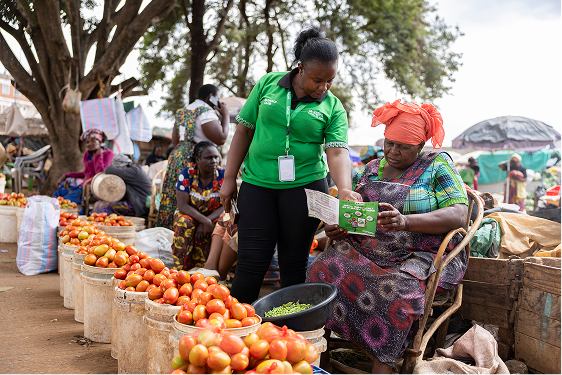
Grace sells vegetables in Kumasi's central market. When her daughter developed malaria complications, the hospital bill was GHS 1,200—more than Grace earns in a month. But because Grace had M-KOPA health insurance, the bill was covered. "I didn't have to close my stall or sell my inventory," she says. "My business survived, and my daughter recovered."
Kwame, Boda Boda Rider, Accra
Kwame had a motorcycle accident—not serious, but enough to require three days in the hospital. Without insurance, he would have lost three days of income (GHS 300) plus paid hospital bills (GHS 800). With insurance, the bills were covered and he received GHS 150 in hospital cash benefits. "I actually came out ahead," he laughs. "And I learned to be more careful on the road."
Ama, Hairdresser, Takoradi
Ama needed surgery for a chronic condition. The cost: GHS 8,000. She had been saving for two years to afford it, but the pain was getting worse. When she got her M-KOPA phone with health insurance, she finally had the surgery. "I can work without pain now," she says. "And I still have my savings for my children's education."
These are the everyday reality of what health insurance does. It protects families from financial catastrophe while enabling better health outcomes.
One Phone, Whole Household
Here's something many people don't realize: while the complimentary health cover that comes with eligible M-KOPA smartphones is typically for the phone owner, some upgraded M-KOPA health cover plans allow customers to add eligible family members.
Depending on the plan, this may include:
- Spouse
- Children (up to a certain age)
- Sometimes parents or other dependents
This means one smartphone purchase can protect an entire household. The cost per person becomes incredibly affordable. For Kenyan families, this is transformative. Parents don't have to choose which child to take to the hospital. Women don't have to sacrifice their own healthcare for their children's needs. Entire households gain access to formal healthcare.
Comparing Your Options: Health Insurance in Ghana and Kenya
Let's compare the health insurance options available to everyday earners:
Ghana
National Health Insurance Scheme (NHIS)
- Cost: GHS 0-48 per year (subsidized for poor)
- Coverage: Basic healthcare at public facilities
- Challenges: Long wait times, limited drug availability, bureaucratic enrollment
- Best for: Those who can't afford any other option
Private Health Insurance
- Cost: GHS 500-2,000+ per year
- Coverage: Comprehensive, private hospitals
- Challenges: Expensive, requires upfront annual payment, complex enrollment
- Best for: Formal sector employees with steady income
M-KOPA Bundled Insurance (Turaco)
- Cost: Included in smartphone payments
- Coverage: Good coverage at network hospitals, hospital cash benefit
- Advantages: Automatic enrollment, no upfront payment, simple claims process
- Best for: Informal workers with irregular income
Kenya
National Hospital Insurance Fund (NHIF)
- Cost: KES 500-1,700 per month (based on income)
- Coverage: Public hospitals, some private facilities
- Challenges: Requires formal employment or self-registration, monthly payments
- Best for: Formal sector employees
Private Health Insurance
- Cost: KES 10,000-50,000+ per year
- Coverage: Comprehensive, private hospitals
- Challenges: Very expensive, annual payments, medical underwriting
- Best for: High-income earners
M-KOPA Bundled Insurance
- Cost: Included in smartphone payments
- Coverage: Varies by plan and country benefits
- Advantages: Accessible to informal workers, flexible payments
- Best for: Everyday earners with irregular income
For informal workers (which make up the majority of our customers), bundled insurance is often the only realistic option.
Protect Your Family Today
\If you're reading this and you don't have health insurance, ask yourself: What would happen if you got sick tomorrow? Can I afford the hospital bills? Would I have to sell assets or borrow money? Would my business survive? Would my family be okay?
If the answers scare you, it's time to act.
Get your M-KOPA smartphone with bundled health insurance today. Protect your health. Protect your income. Protect your family.
.svg)


