



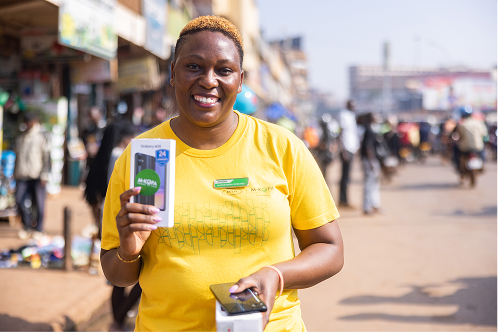
Getting your first smartphone can be exciting, but it can also feel like being handed a bigger world you’re expected to understand immediately. Unlike feature phones, there are a variety of things to learn with a smartphone: apps, passwords, security, mobile data, cameras, online payments, unfamiliar icons, etc.
M-KOPA has now served 10 million customers across 5 markets, and our experience shows that making smartphones affordable is only one part of digital inclusion. The other part is helping people become confident enough to use the device in ways that make their work, finances and everyday lives better.
Access first
The first obstacle to digital transformation is getting the smartphone into someone's hands. Across Africa, affordability remains the single largest barrier to mobile-internet adoption, while limited digital skills and other social barriers continue to keep people offline even where network coverage already exists. A report from GSMA says in 2025, approximately 63% of Africans lived within mobile-broadband coverage but were still not using mobile internet.
This is why smartphone financing has mattered. Rather than requiring an Every Day Earner to save the full purchase price before getting connected, M-KOPA allows eligible customers to start with a deposit and make smaller repayments over time. As of September 2025, we had connected 2.5 million people to their first smartphone since 2020, while 40% of the customers surveyed that year were first-time smartphone users.
Getting the device, however, is only the beginning. A smartphone can technically connect someone to the internet while remaining an expensive calling device if the owner does not yet know how to use its wider features.
Confidence next
The GSMA research on smartphone adoption in Africa identifies a lack of digital skills as an additional barrier even among people who understand the potential benefits of being connected, particularly because uncertainty can reduce people's confidence in using a smartphone effectively. For a first-time smartphone user, the easiest way through that uncertainty is usually not to learn everything the phone can do. It is to begin with something familiar.
Someone who already speaks to their customers by phone might start using WhatsApp because it helps them share photographs, voice notes and locations in chats. Someone who regularly asks friends for directions might begin using Maps. A trader can learn to photograph stock before worrying about every other camera setting on the device.
In our guide for first-time smartphone owners, we share practical tips on how to get started with a smartphone such as setting up the device, creating an account, understanding the home screen and protecting the phone with a PIN, password, fingerprint or facial recognition. The aim is not to become a technology expert on the first day; it is to become comfortable enough to take the next useful step.
Start with what you already do
The transition becomes much easier when people discover that a smartphone does not necessarily require them to invent an entirely new life. Often, it simply gives them a better way to do something they were already doing.
In Kenya, Peter Sunkuyia had spent years using feature phones while running a butchery and working as a tour guide. After getting his M-KOPA smartphone, he began operating his business differently–taking pictures of his stock and sending them to customers ahead. The same phone also allowed him to download a safari application that helps him locate areas where animals have recently been sighted when he is working as a guide.
Nothing about Peter's businesses fundamentally changed overnight. He was still selling meat and guiding tourists. What changed was his ability to show customers his stock, communicate more effectively and access information that made him better at work he already understood.
That pattern is worth remembering for anyone using a smartphone for the first time. The first useful feature does not have to be impressive. If it makes one part of your existing day easier, it has already started doing its job.
Explore other things the phone can change for you
Once the basics become familiar, you can even start using your smartphone to make money. In our survey, 70% of customers used their smartphones to generate income, while 59% said they were earning more since getting one.
Felistus Mukilya, who sells cooked food in Kenya, shows how simple that progression can be. She previously relied on a basic button phone, but after getting a Nokia smartphone through M-KOPA, she began to leverage social media for her business. Customers can place their orders before lunchtime, allowing her to prepare orders and deliver more efficiently.
For hairstylist Sarah Anyango in Dandora, the problem was different. Customers would send her photographs of hairstyles they wanted, but her basic phone could not properly receive them, leaving her to depend on descriptions. With her M-KOPA smartphone, Sarah can now meet her customers right where they are. The phone has therefore become both a way to improve her craft and a way to attract more customers.
These are forms of digital transformation that rarely look dramatic from the outside. A food seller begins taking orders before cooking. A hairstylist learns new styles without attending a physical class. A butcher can show a customer exactly what is available before that customer travels to the shop. The businesses remain recognisable, but the smartphone changes how much their owners can do with them.
The pattern travels across different markets
The same relationship appears across M-KOPA's markets, although customers naturally begin from different places and use their smartphones differently.
- In Kenya, our latest country impact findings show that 67% used their M-KOPA devices to generate income, while 52% reported earning more since joining the platform.
- In Nigeria, 77% of customers use their smartphones to generate income and 75% report earning more.
- In Ghana, 55% use the device to generate income and 54% report earning more since purchasing their smartphone.
- South Africa provides another version of the same story. There, 64% of surveyed M-KOPA customers use their smartphones to generate income.
Across these markets, the smartphone's economic value does not come from the touchscreen itself. It comes from the new things the person on the other side of that screen becomes able to do.
A smartphone can become your financial gateway
As first-time smartphone users become comfortable communicating, working and accessing information through their phones, another part of the transition can begin. For an M-KOPA customer, paying towards the smartphone also builds a repayment history, which can eventually help eligible customers access additional services like affordable data, device protection, digital loans, and health cover.
One of our customers in Uganda – Joseph Kayondo – shows how these different forms of access can begin to reinforce one another.
Joseph works as both an Uber driver and a farmer, using his smartphone for his Uber app and to communicate with his farming clients. Over time, he has also received digital loans totalling about $320, which he has used for needs including his children's school fees and his businesses.
Learn the phone at your own pace
For anyone making the transition today, there is no reason to learn every feature immediately. A more useful approach is to build confidence in layers, beginning with the parts of the smartphone that solve an immediate need.
Start by learning how to navigate the home screen, make and receive calls, save contacts and send messages. Then learn how to connect to mobile data or trusted Wi-Fi, take and find photographs, and install apps from the official app stores. Likewise, learning to check your data balance, using trusted Wi-Fi when it is available and controlling automatic downloads makes it easier to enjoy the internet without losing track of what you are spending on data.
Security should also become part of your learning process from the beginning. A smartphone may contain personal messages, photographs, financial applications and other sensitive information, so setting a strong PIN or password and being cautious with unfamiliar links or requests for passwords is very important. The goal is not to become frightened of using the internet, but to develop the habits that allow you to explore it more confidently.
Digital transformation builds confidence
The strongest lesson from our customers’ experiences is that digital transformation rarely happens at the moment you buy a smartphone. It happens afterwards, as you gradually discover what the device can do for you.
Peter learned that his camera and WhatsApp could help him sell more meat. Felistus discovered that a WhatsApp group could organise her orders before she started cooking. Sarah found new ways to learn hairstyles and show potential customers her work. Joseph uses his to support two different sources of income.
None of them needed to understand every single smartphone feature before those benefits became possible. That is perhaps the most practical way to think about becoming digitally confident. You do not learn the smartphone first and begin benefiting from it afterwards. Much of the learning happens because you are already using it to do something useful.
Make your smartphone useful to you
Moving to a smartphone isn't just about switching to a touchscreen; it's about unlocking new ways to work, connect, and grow; one simple task at a time.
Start your journey with an M-KOPA smartphone today!
.svg)


