



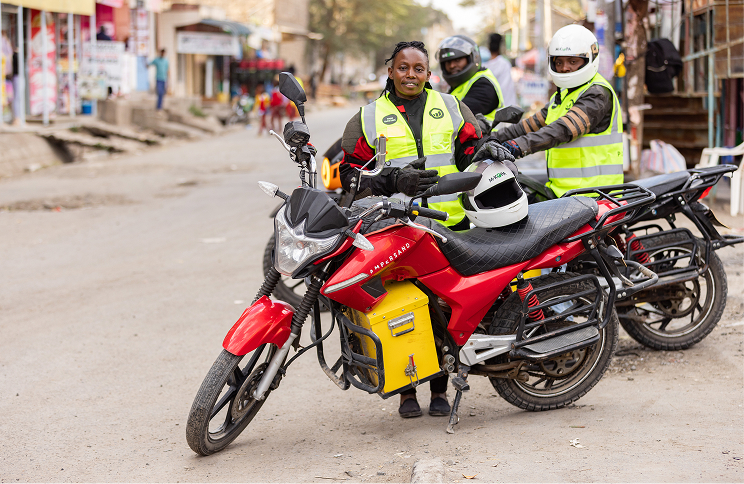
The rise of sustainable mobility and new environmental measures has put electric vehicles in the spotlight, inevitably leading to comparisons with traditional internal combustion engine vehicles. Naturally, each has advantages and disadvantages that can influence motorcyclists' choices.
Internal combustion motorbikes have dominated the market for decades, prized for their performance, range, and well-developed infrastructure. However, electric motorbikes are gaining traction and wide-spread adoption, thanks to their low environmental impact, reduced running costs, and quiet operation.
In this article, we’ll provide insights that help you answer the question: do electric motorbikes really perform as well as petrol bikes?
1. Performance and driving feel
The performance and feel of a motorcycle are key factors for many riders. Internal combustion engine motorbikes are distinguished by their powerful engines, vibrations, and characteristic sound, all of which contribute to the riding pleasure. Handling and high-revving power are often superior, offering a more intense and, above all, authentic experience. Electric motorbikes, on the other hand, stand out for their instant acceleration thanks to their readily available torque. Their quiet operation allows for a more relaxed ride, which can be appreciated in urban environments. However, the lack of mechanical feel and the absence of a gearbox can sometimes give the impression of a ride that is too linear and soulless.
2. Battery life and charging
Range is a key factor when choosing a two-wheeler. The freedom offered by two-wheelers is all the more enjoyable when accompanied by sufficient range. Internal combustion engine motorbikes are distinguished by their long range, thanks to fuel tanks that allow them to travel several hundred kilometers before needing to refuel. Furthermore, gas stations are widespread, ensuring quick refueling. However, electric motorbikes have a shorter range, generally between 100 and 300 km depending on the model and riding conditions. Charging can take several hours depending on the charging station used, although fast-charging systems can restore some of the range in about an hour.
3. Cost of use and maintenance
The cost of owning a motorbike isn't limited to its purchase price. Acquiring a vehicle means also taking into account maintenance and operating costs, which are an integral part of the model selection process. For example, internal combustion motorbikes involve regular expenses related to engine maintenance, oil changes, filter replacements, and various engine repairs. Electric motorbikes, on the other hand, require significantly less maintenance. The absence of a complex motor reduces the number of wearable parts, and the cost of charging is considerably lower than that of fuel. However, battery replacement represents a significant long-term investment.
4. Environmental impact
Environmental impact is now an increasingly crucial factor, and individuals are paying more and more attention to ecological issues. Nevertheless, it is an extremely complex subject that truly challenges manufacturers. On the one hand, internal combustion engine motorbikes use fossil fuels, emitting CO2 and thus contributing to air pollution. On the other hand, electric motorbikes, although they do not emit any direct pollution during use, are not a perfect solution. Their environmental impact remains significant due to the production and recycling of lithium batteries, which require scarce resources and whose end-of-life processing still represents a technological challenge. By and large, electric motorbikes contribute to cleaner transport.
5. Comfort and practicality
Internal combustion motorcycles offer a wide variety of choices, with models suited to all needs, whether for long journeys or winding roads. The engine noise can be a source of pleasure for some, but a nuisance for others. Electric motorcycles, on the other hand, are particularly popular in urban areas for their quietness and agility.
In summary…
Each of these two options has its own advantages and disadvantages. There is no universally best solution; the choice will depend primarily on the rider's profile, riding style, and specific needs. For example, a touring rider will likely prefer a combustion engine motorcycle for long journeys with quick refueling. Conversely, an electric motorbike would be the perfect option for an urban rider, offering increased agility in tight spaces and low daily running costs. Furthermore, the market is evolving rapidly, and technological advancements are likely to make electric motorbikes even more competitive in the future.
At M-KOPA, we make the ownership of these prized vehicles easy for everyone, regardless of their household income.


.svg)


