What happens when you’re low on cash but need to restock before customers pay, for instance. Or you’re a commercial rider and need an urgent repair before getting back on the road. Sometimes, your household may face an unexpected expense a few days before your next income arrives. This is why digital loans are beneficial.
Although the speed and convenience of digital credit can also make it easier to borrow without fully understanding the cost, the lender or what happens if repayment becomes difficult. That risk is already visible in both Nigeria and Ghana. According to IPA’s research in Nigeria, almost two in five digital-credit users surveyed had been unable to repay a loan at some point. And GSMA’s research on financial health and digital credit in Ghana found that digital borrowers were more likely to report repayment difficulties than people borrowing through non-digital channels.
Using digital credit responsibly therefore begins with knowing when borrowing can help, how to recognise a dangerous lender and whether the repayment will leave you financially better or worse off.
When digital credit can help
Before accepting a loan, ask whether you are solving a temporary cash-flow problem or a more permanent shortage of income. A temporary gap means there is a reasonably clear source of money coming, but it will arrive too late for the expense you need to meet today.
That could mean:
- buying stock for predictable demand;
- repairing an asset you use to earn income;
- completing work before a customer payment arrives;
- handling an urgent expense shortly before expected income.
The important thing is knowing where repayment will come from, because borrowing becomes much riskier when there is no clear future inflow, or when loans are repeatedly needed to cover ordinary expenses.
Warning signs of a dangerous lender
Oftentimes, governments put regulations in place to protect both borrowers and lenders.
In Nigeria, the Federal Competition and Consumer Protection Commission (FCCPC) introduced its current digital-lending regulations after complaints involving harassment, public shaming, privacy violations and other exploitative practices. Similarly, the Bank of Ghana’s 2025 Financial Stability Review identified excessive and non-transparent interest rates, coercive collection practices and misuse of borrowers’ personal data among risks associated with unregulated digital lenders.
As a borrower, you also need to do your due diligence before borrowing. The following signs show that you may be dealing with a dangerous lender:
- fees or interest are unclear
- the lender pressures you to accept immediately
- the app requests unnecessary access to contacts, photos or other personal information
- repayment conditions are vague or change unexpectedly
- the lender threatens to embarrass you or contact people in your phone
- there is no clear complaints process
- you cannot verify that the lender is authorised to operate.
A quick and easy loan doesn’t automatically make it safe.
How to check a lender and know your rights
Before accepting a loan, first establish who you are borrowing from. In Nigeria, borrowers can check the FCCPC’s register of approved digital lenders. In Ghana, digital-credit providers are supervised by the Bank of Ghana under its Digital Credit Services Provider framework, and licensed providers are required to display their licence reference number on customer-facing platforms.
After confirming the credibility of the borrower, then check the loan offer itself. These questions should help you know what to look out for:
- How much money will you actually receive?
- What is the total amount you must repay?
- What interest and fees are included?
- When is repayment due?
- What happens if you are late?
- Will your repayment history be reported to a credit bureau?
- What personal information is being collected?
- How can you complain if something goes wrong?
These checks matter because borrowing does not remove your right to clear information, privacy and fair treatment. Ghana’s rules now require digital lenders to disclose the principal, interest, fees and total cost of credit before the loan is granted. They also prohibit abusive collection practices including threats, harassment, public shaming and unauthorised contact with people in a borrower’s phone. Nigeria’s regulations similarly require transparent loan terms and provide protections around personal information, complaints and debt collection.
Borrowing money creates a responsibility to repay it, and it’s only fair that you understand what you’re getting into as a borrower.
How to avoid falling into a credit trap
Even a legitimate lender can provide a loan that is wrong for your financial situation. A credit trap often begins when one loan stops solving a temporary problem and starts creating the need for another.
Warning signs include:
- borrowing again mainly to repay an existing loan
- holding several short-term loans without understanding their combined repayments
- repeatedly borrowing for the same everyday expenses
- using most of your expected income to service debt
- missing one repayment and immediately borrowing somewhere else
- taking every increase in your credit limit simply because it is available.
One thing to note: If credit helps you restock, repair an income-generating asset or bridge a temporary gap and you can repay it without immediately borrowing again, it may have done its job. If repayment creates the need for another loan, the debt may simply be moving the problem forward.
What responsible lending looks like at M-KOPA
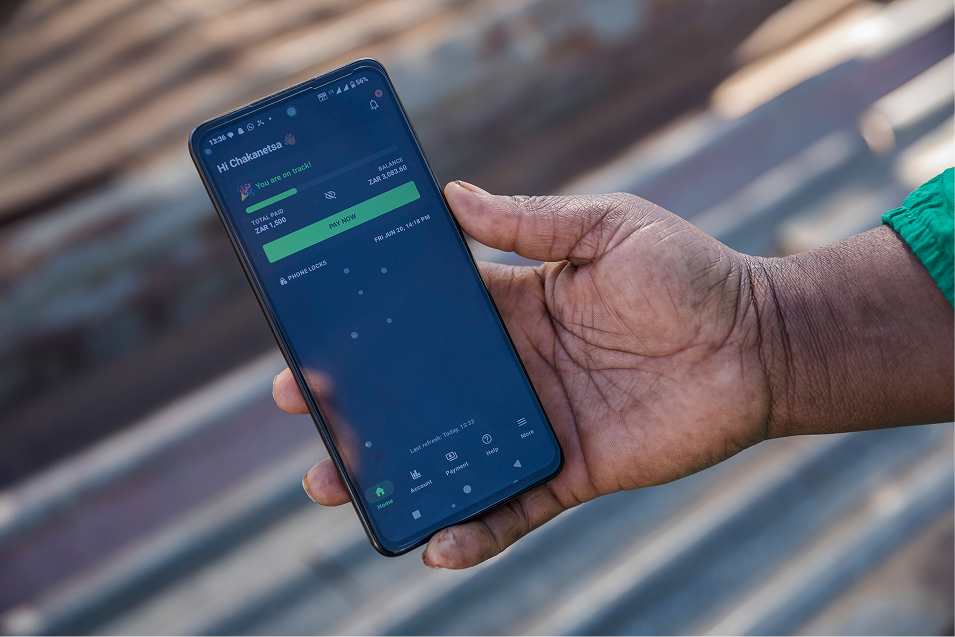
At M-KOPA, we approach digital credit as something that should develop progressively alongside a customer’s ability to manage it. This applies across our current market in Africa. In both Ghana and Nigeria, eligible customers can begin unlocking access to digital loans after at least three months of consistent payments on their M-KOPA smartphone.
Your payment history gives us information about how you manage an existing credit obligation before additional credit is considered. Reaching the eligibility period does not guarantee a loan, and qualifying for one does not mean a customer has to borrow. For customers, the advantage is a more progressive relationship with credit: access can grow alongside demonstrated repayment behaviour rather than beginning with an immediate, standalone digital loan.
The same principle should guide the decision to borrow. Take credit because it solves a clear problem and the repayment is manageable, not simply because more credit has become available.
Conclusion
Responsible borrowing is ultimately less about how quickly you can access money and more about what your finances look like after you have paid it back.
For eligible M-KOPA customers in Ghana and Nigeria, you can check your account to see whether you qualify for a digital loan and review the repayment terms before deciding whether borrowing is right for you.
Learn more about our digital loans.