
Africa has more mobile connectivity than ever before, but having network coverage and owning a smartphone are still very different things. According to GSMA’s report on Africa’s Mobile Economy Africa, 416 million people were using mobile internet across Africa, equivalent to 28% of the population. At the same time, 960 million people (i.e. 64% of the continent’s population) lived within mobile-broadband coverage but were not using mobile internet.
Smartphones have become one of the main gateways into the digital economy: how people communicate with customers, make payments, learn, access financial services and increasingly earn income. However, the accessibility gap still remains.
Across our five markets spanning Kenya, Nigeria, Ghana, Uganda and South Africa, smartphone ownership has grown considerably, but the numbers also show how much opportunity remains.
How smartphone ownership compares across the five markets
Smartphone adoption looks very different across our five markets. The World Bank’s 2025 Global Findex Database, based on nationally representative surveys conducted in 2024, measures the percentage of adults aged 15 and above whose main mobile phone is a smartphone, giving us one consistent measure across the five countries.
In South Africa, about 68% of adults had a smartphone as their main phone in 2024. Kenya was at about 55%, closely followed by Ghana at approximately 54%. The gap becomes wider in West and East Africa’s larger lower-income markets. Only about 34% of Nigerian adults had a smartphone as their main phone, while Uganda stood at roughly 27%.
These figures put the five markets at noticeably different stages, showing that smartphone ownership is far from universal, even in the most connected of the five markets.
The five markets are moving at different speeds
While the World Bank Global Findex Database gives us a comparable snapshot across countries, more recent national data tells us how quickly individual markets are changing, although those figures often use different measures.
In Kenya, for example, the Communications Authority reported that smartphones represented 63.7% of mobile phones connected to Kenyan networks in the first quarter of 2026. That is a device-based measure rather than an individual-ownership rate, but it shows the continuing shift from basic phones towards smartphones.
Similarly, the Uganda Communications Commission reported that the number of smartphones connected in the country had grown to 19 million devices by September 2025. The regulator nevertheless said affordability, limited digital skills and a lack of relevant local content continued to contribute to the country’s access and usage gaps.
Ghana demonstrates why network availability alone does not solve smartphone adoption. In March 2026, more than 90% of the population had access to 4G coverage, while usage remained below 60%, with smartphone affordability identified as one reason for the gap.
The Independent Communications Authority of South Africa reported 82.7 million smartphone subscriptions (active connections on mobile networks) in 2024, up 10.36% from the previous year. While this does not speak to smartphone ownership, it re-establishes South Africa as the most mature smartphone market among the five.
The Nigerian Communications Commission reported 179.6 million active mobile subscriptions in 2025, up from 164.9 million in 2024, while its 2026 network reports highlight the growing role of 4G- and 5G-capable smartphones in shaping mobile-data usage across the country.
Why millions of people are still without smartphones
Increasing network coverage has not automatically translated into smartphone ownership. The GSMA’s research on smartphone adoption in Africa identifies affordability as the biggest barrier to wider adoption. In Sub-Saharan Africa, the median entry-level smartphone cost about $39 in 2024, equivalent to roughly 26% of average monthly income. For the poorest 40% of the population, that same device represented about 64% of monthly income; for the poorest 20%, it represented 87%.
That affordability problem also contributes to large differences between urban and rural consumers. Another of GSMA’s report, on the State of Mobile Internet Connectivity, found that smartphone ownership among adults in Kenya was 55% in urban areas compared with 41% in rural areas. In Uganda, it was 33% among urban adults and 20% among rural adults. Nigeria had an even wider divide with 62% smartphone ownership among urban adults compared to 28% in rural areas.
This shows that the cost of smartphones is one of the main reasons why people remain offline. But that’s not the only factor. The GSMA also identifies digital skills, confidence, literacy and the perceived relevance of online services as important barriers.
However, affordability determines whether many people can get the device required to overcome these other barriers in the first place.
Why closing the smartphone gap matters
The difference between a smartphone and a basic phone increasingly affects what someone can do online. According to the World Bank’s Global Findex Database earlier cited, 92% of smartphone owners in the economies surveyed had used the internet during the previous three months. The same research notes that smartphones are the primary way people in low- and middle-income economies access the internet and that smartphone ownership can expand access to communication, digital marketplaces, financial services, education and government information. This makes smartphone affordability one of the central barriers to wider digital inclusion.
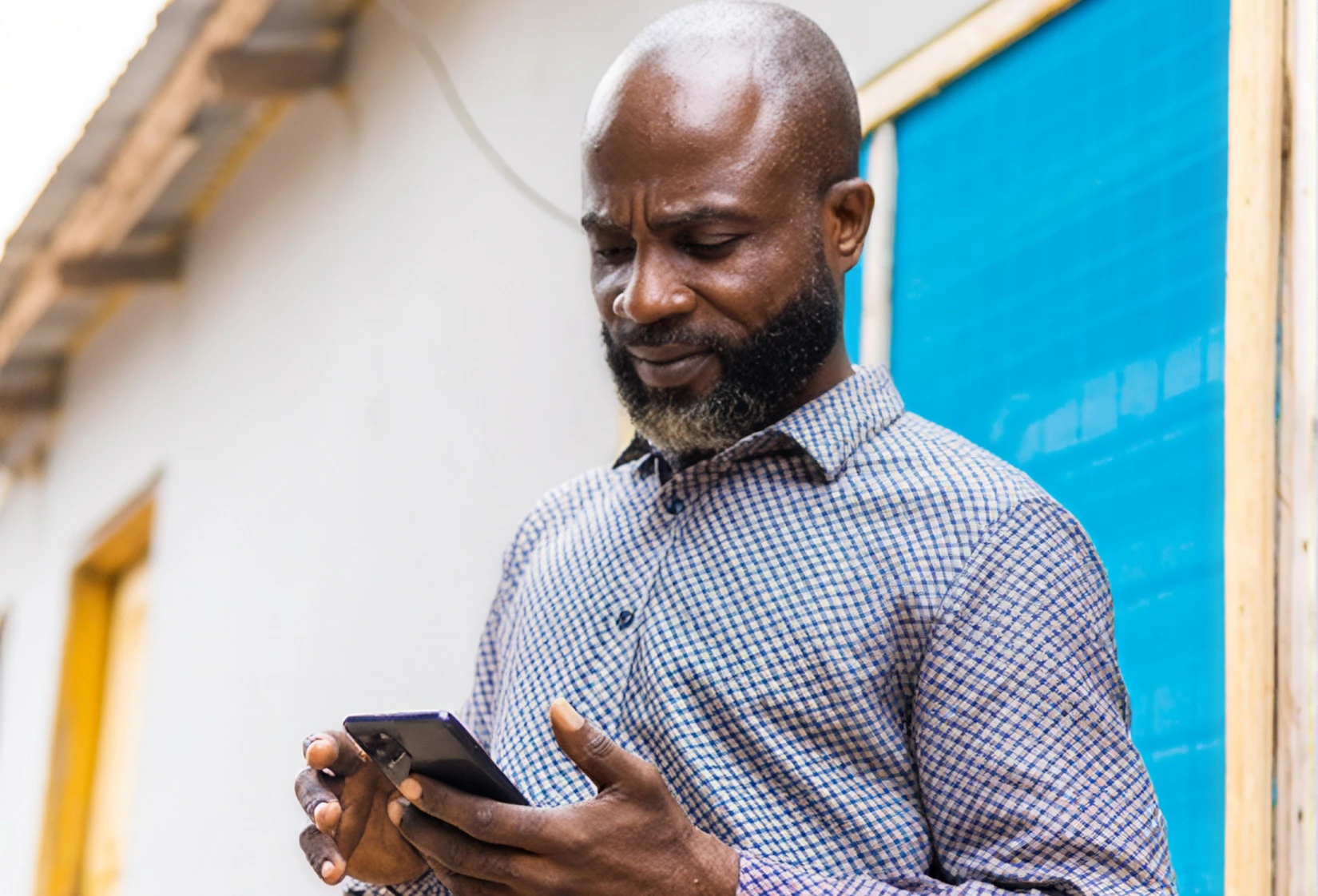
For Every Day Earners, this wider access to the digital economy can translate into very practical everyday opportunities. A trader can communicate with suppliers and display products through WhatsApp. A rider can access navigation and work platforms. A small business owner can receive digital payments, advertise to customers and access financial products using the same device. The value of smartphone adoption is therefore not simply the number of devices in circulation. It is what people are able to do once they have one.
Making smartphone ownership more accessible
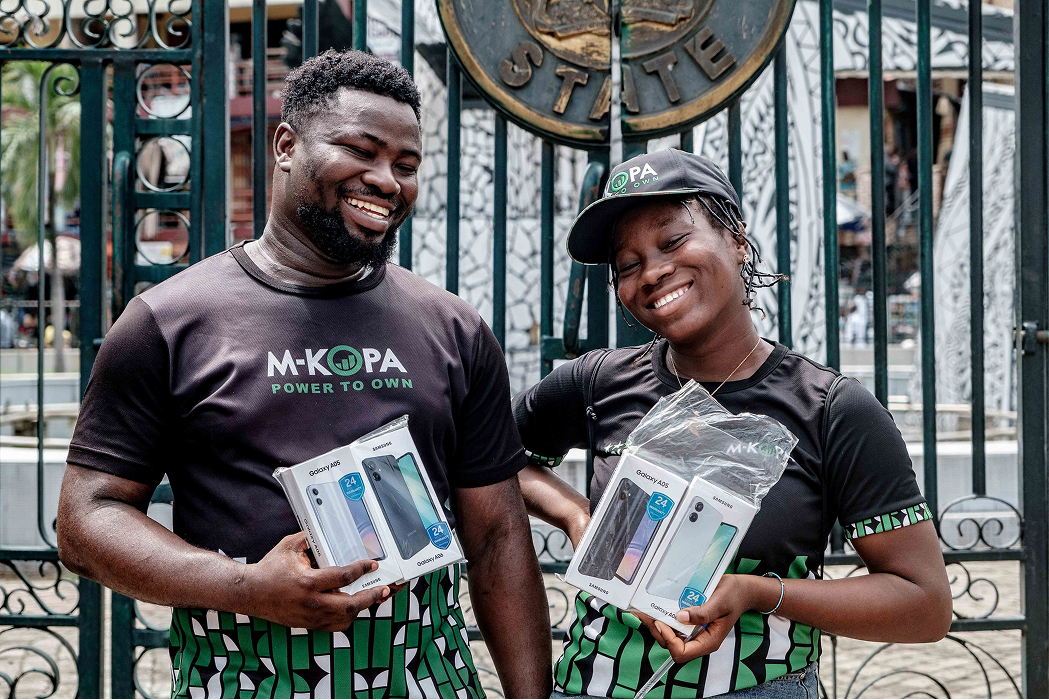
Our smartphone-financing model directly addresses one of the biggest barriers to smartphone penetration: affordability. Through this pay-as-you-go model, we’ve reached 10 million customers across Kenya, Uganda, Ghana, Nigeria and South Africa as of July 2026. This gives us a leading role in helping Every Day Earners move beyond basic connectivity towards smartphones that can unlock more benefits, including health cover and digital loans.
Apart from reducing smartphone penetration gap, we’ve also connected 2.5 million people to their first smartphone since 2020. The impact is visible in our individual markets. For example:
- In Kenya, we have supported 4.5 million smartphone users by November 2025, including 2.1 million first-time smartphone owners.
- In Ghana, 36% of customers surveyed said their M-KOPA smartphone was their first phone, rising to 41% among women.
- In Nigeria, we have served more than one million customers by February 2026 and enabled 290,000 people to access a smartphone for the first time.
We’re not simply putting more smartphones into the market, rather making smartphone ownership possible for Every Day Earners.
Conclusion
The next phase of Africa’s digital transformation will depend increasingly on whether people can afford the devices, develop the skills and find the services that turn network coverage into meaningful participation in the digital economy.
For millions of Every Day Earners, getting a smartphone remains the first step.
That is the gap we’re working to close.
Get an M-KOPA smartphone today!